White's tree frogRanoidea caerulea
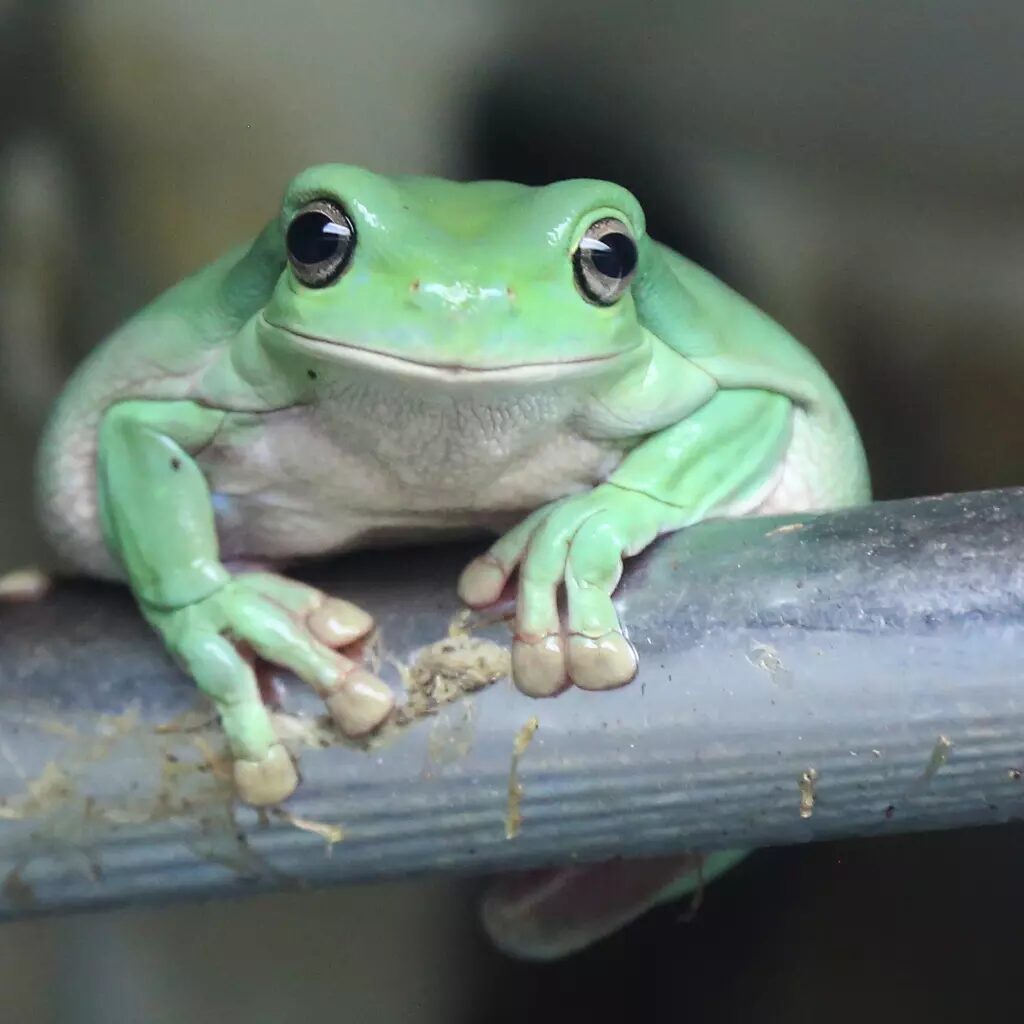
White's tree frogs (also called dumpy tree frogs) come from Australia and New Guinea. They're hardy, chubby, nocturnal climbers with a famously relaxed expression.
Enclosure
One adult needs at least 45 × 45 × 60 cm (18 × 18 × 24 in), with height for climbing. Glass terrariums with front opening and mesh tops work well.
Heating
Provide a warmer area around 28–29°C, with an ambient temperature of 23–24°C. Nights can drop to about 18°C. Use a thermostat and digital thermometers.
Lighting & UVB
Low-level UVB is recommended, on a 12-hour day. Replace tubes every 12 months.
Humidity & water
Aim for around 50% humidity, misting so it rises to about 70% for part of the day. Good ventilation prevents the enclosure staying soggy.
Use dechlorinated tap water or spring water for drinking and misting, never distilled. Provide a shallow water bowl, change it daily.
Substrate & decor
A moisture-holding substrate (soil, coco fibre or moss), or a bioactive setup. Add sturdy branches, cork and broad-leaved plants to climb and sleep on.
Diet & feeding
Juveniles: insects daily. Adults: insects every 2–3 days, as many as they eat in about 15 minutes.
Crickets, dubia roaches and black soldier fly larvae make good staples. White's tree frogs are prone to obesity, so don't overfeed.
Supplements
Lightly dust insects with a calcium and multivitamin supplement.
Handling
Frogs absorb chemicals through their skin, so handle as little as possible. If you need to, wear clean, powder-free nitrile gloves and wash your hands afterwards.
Health watch
Obesity, skin infections, red leg (redness on the legs and belly) and dehydration.
Every animal is an individual. Use this sheet as a starting point, measure temperatures and UVB properly, and speak to an exotic vet about any health concerns.
Last updated October 2026. Care guidance is subject to change as husbandry research develops.