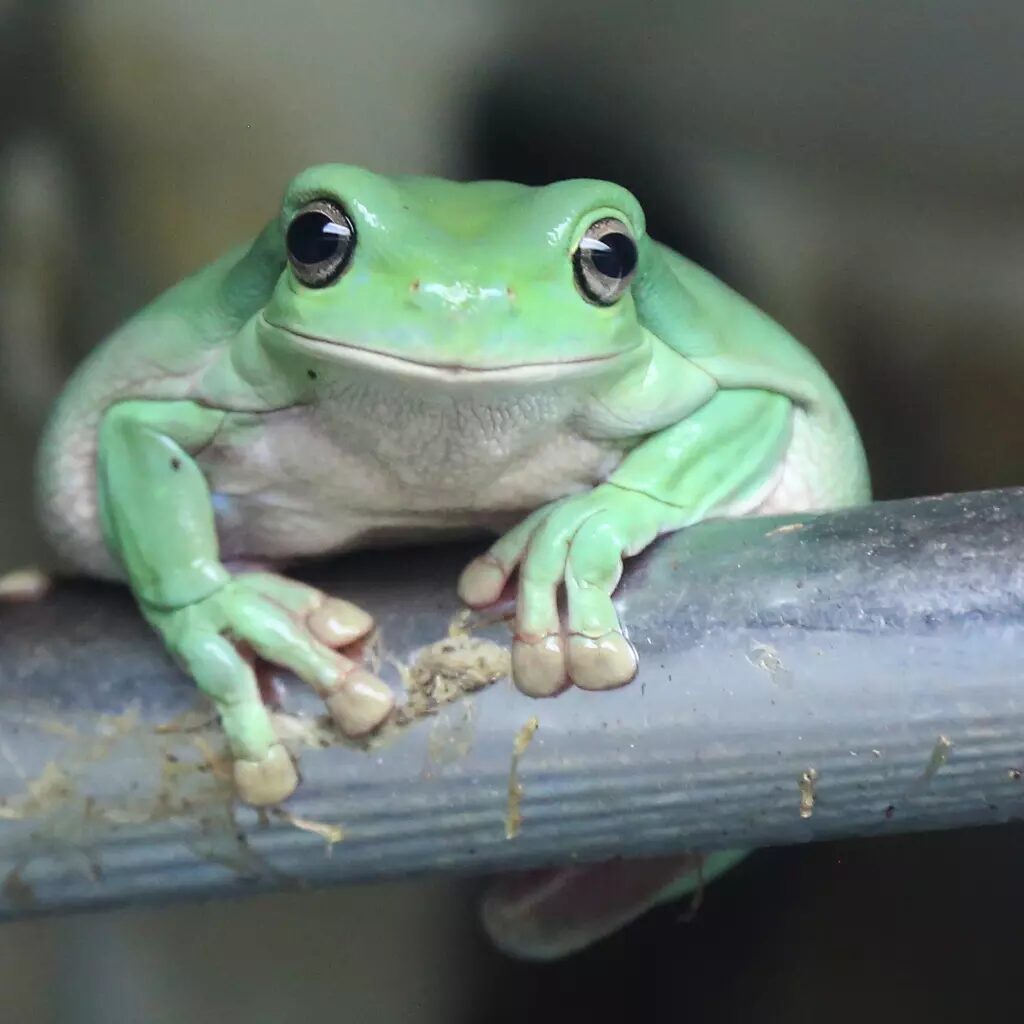
Pacman frogCeratophrys spp.
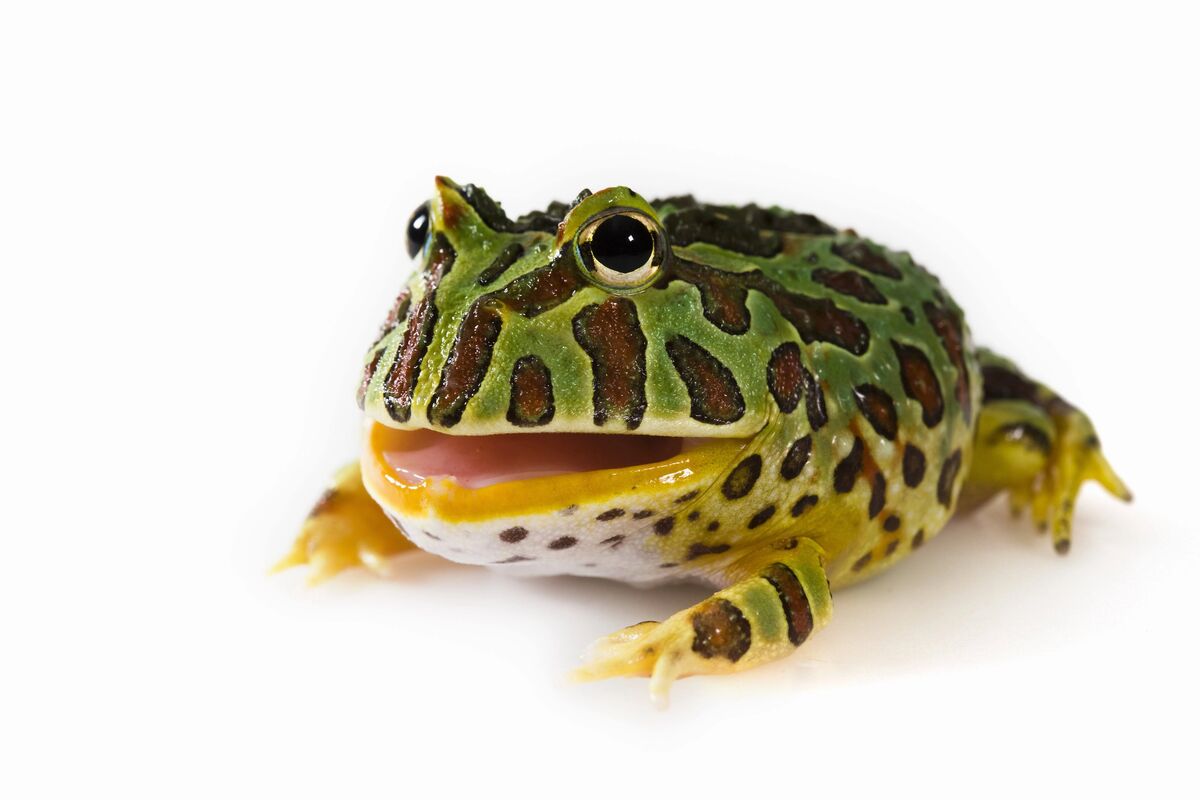
Pacman frogs are round, ground-dwelling frogs from South America. They spend most of their time buried with just their eyes showing, waiting to ambush anything that fits in their huge mouths.
Enclosure
Adults need at least 60 × 45 × 30 cm. Floor space and deep substrate matter more than height.
House singly: pacman frogs will eat each other.
Heating
Keep days at 24–27°C, never above 29°C, with nights no lower than 18°C. Use a thermostat and a digital thermometer.
Lighting & UVB
Low-level UVB is recommended, around 14 hours in summer and 10 in winter. Replace tubes every 12 months.
Humidity & water
Keep humidity at 60–80%. Mist once or twice a day and use a moisture-holding substrate.
Offer a shallow water dish they can sit in, using dechlorinated or spring water, and change it daily.
Substrate & decor
A thick layer of damp soil, coco fibre or moss with leaf litter on top so they can bury themselves. Keep decor simple.
Diet & feeding
Offer insects such as crickets, dubia roaches and earthworms, smaller than the frog's head, using tongs.
Juveniles eat often; adults need feeding less often. Pacman frogs overeat easily, so watch their body shape and cut back if they get too round. Rodents are an occasional food at most.
Supplements
Dust insects with a calcium and vitamin supplement, at every feed for juveniles and about once a week for adults.
Handling
Pacman frogs are a look-don't-touch pet and will bite. If you must move one, wear nitrile gloves and keep it brief.
Health watch
Obesity, impaction from swallowing substrate, skin infections, and drying out if humidity drops.
Every animal is an individual. Use this sheet as a starting point, measure temperatures and UVB properly, and speak to an exotic vet about any health concerns.
Last updated October 2026. Care guidance is subject to change as husbandry research develops.