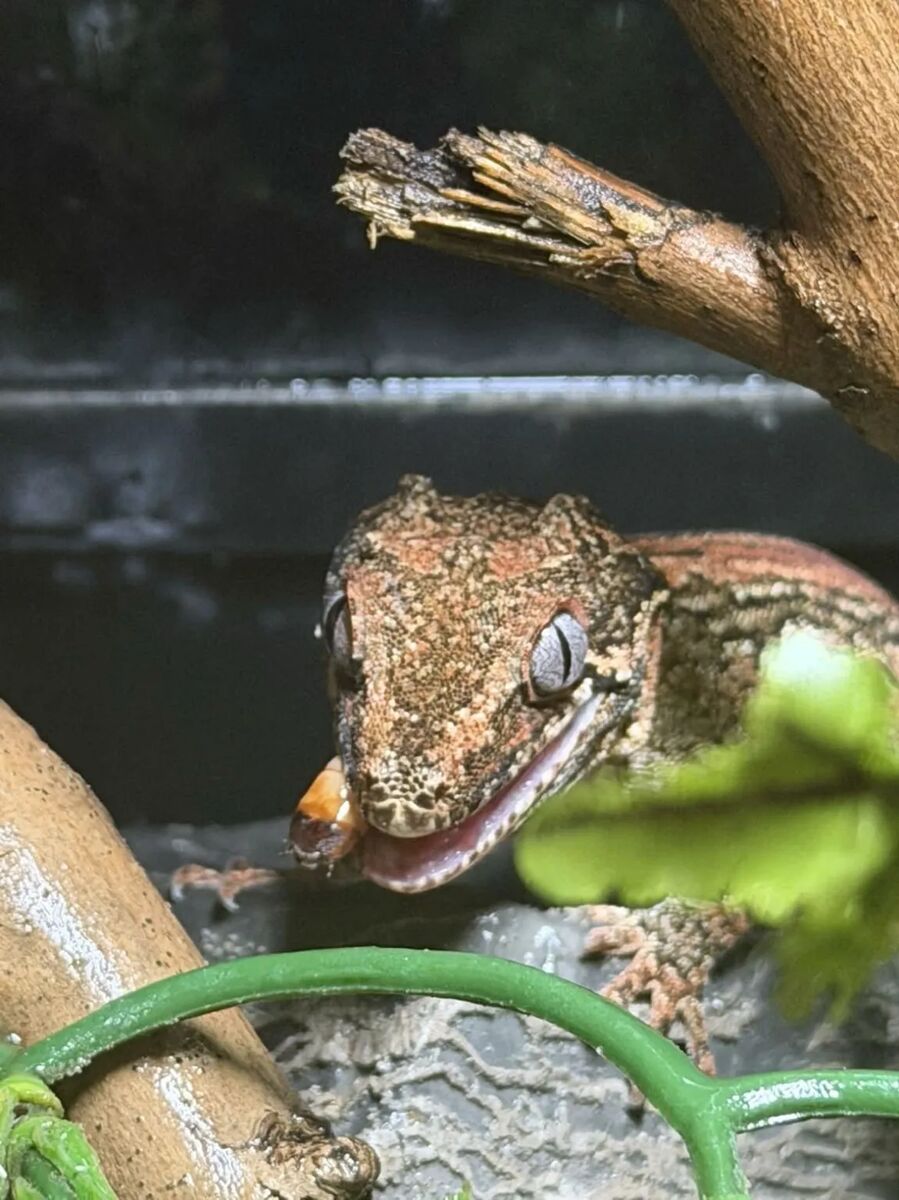
Crested geckoCorrelophus ciliatus
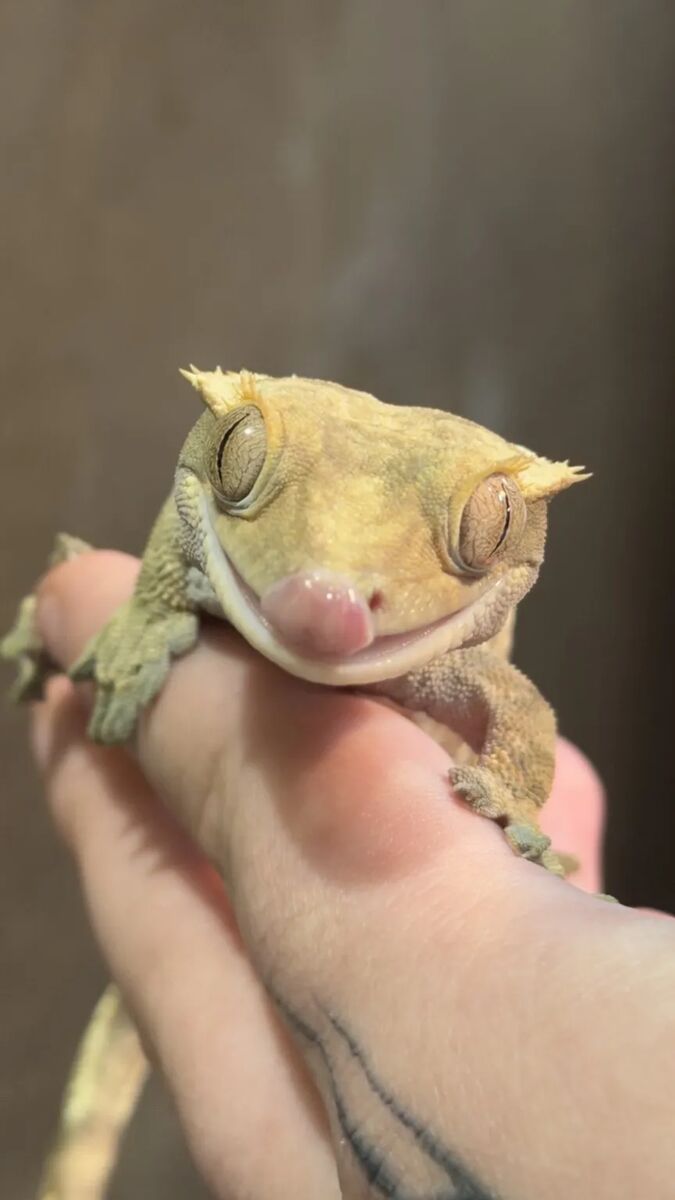
Crested geckos are arboreal, mostly nocturnal geckos from New Caledonia. They're calm, easy to feed on a complete powdered diet, and named for the eyelash-like crests above their eyes.
Enclosure
Height matters most: crested geckos climb. Adults need at least 45 × 45 × 90 cm (18 × 18 × 36 in); hatchlings under about 12 g can start in 30 × 30 × 30 cm.
Fill the space with branches, vines and live or artificial plants for cover, with a few spots high up to bask and rest.
House singly. Two males must never be kept together, and males and females will breed.
Heating
Cresties are heat-sensitive. Aim for 28–29°C near the top and 21–24°C lower down, dropping to 18–22°C at night.
Use a low-wattage heat source on a thermostat and check temperatures with a digital thermometer. Temperatures consistently above 29°C (85°F) cause heat stress.
Lighting & UVB
Provide low-level UVB (UVI 1.0–2.0 at the basking branch), for example a ShadeDweller-type T5 tube. Replace tubes every 12 months.
Run lights for about 12 hours a day (around 14 in summer and 10 in winter if you follow seasons). No coloured night bulbs.
Humidity & water
Keep humidity at 60–80%. Mist in the evening (and lightly in the morning if needed), then let it dry back before misting again to avoid mould.
Provide a small dish of fresh water as well as misting.
Substrate & decor
A moisture-holding substrate such as a soil and coco fibre mix, or a bioactive setup with springtails and isopods, works well. Avoid sand.
Cork bark, branches and dense planting give cover at different heights.
Diet & feeding
Feed a complete powdered crested gecko diet mixed with water to a ketchup-like consistency.
Juveniles (0–12 months): diet daily, insects 1–2 times a week. Adults: diet every 2–3 days, insects about once a week.
Good insects: crickets, dubia roaches, black soldier fly larvae, silkworms. Feeders should be no wider than the space between the gecko's eyes. Fruit is an occasional treat only.
Supplements
Dust insects with calcium. Use calcium without D3 if you provide UVB, or with D3 if you don't.
Handling
Generally calm, but jumpy. Keep sessions short and low to the ground.
Crested geckos can drop their tail when stressed, and it does not grow back.
Health watch
Watch for weight loss, retained shed on toes or tail, a floppy tail or kinked spine (often linked to calcium or UVB problems), and signs of heat stress.
Every animal is an individual. Use this sheet as a starting point, measure temperatures and UVB properly, and speak to an exotic vet about any health concerns.
Last updated October 2026. Care guidance is subject to change as husbandry research develops.