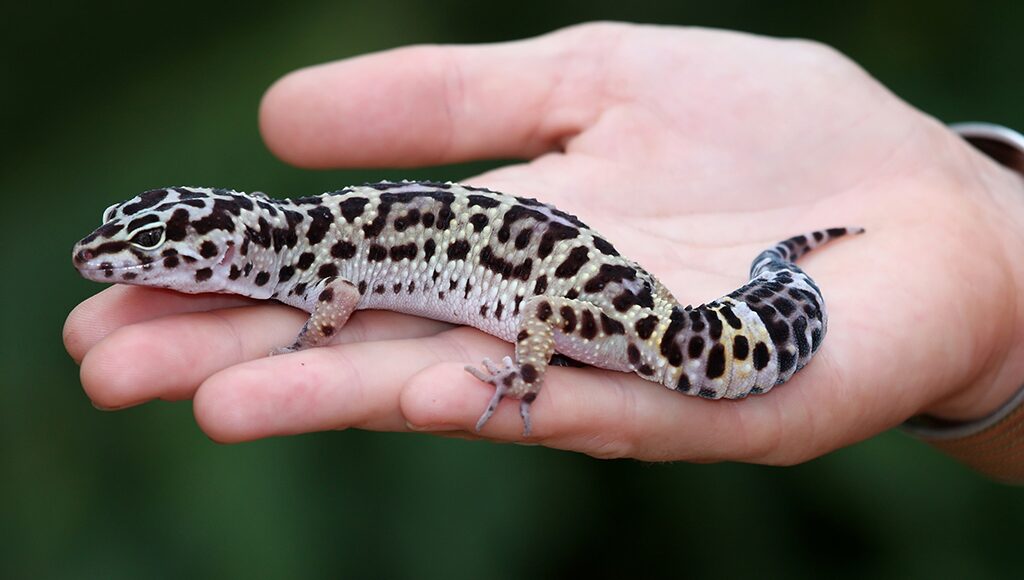
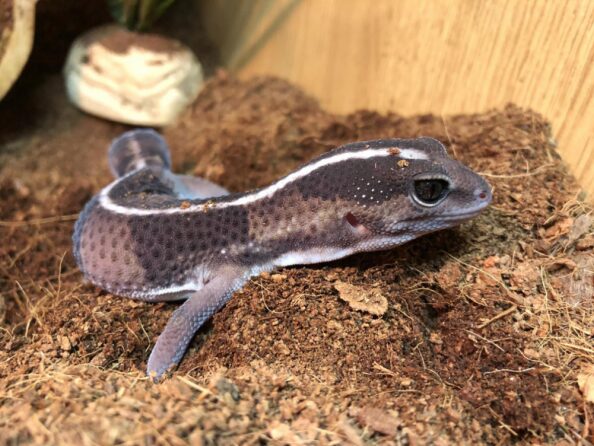
African fat-tailed geckoHemitheconyx caudicinctus
African fat-tailed geckos come from West Africa, from Senegal to northern Cameroon. They're calm, ground-dwelling cousins of the leopard gecko, with eyelids and a slightly more humid lifestyle.
Enclosure
At least 90 × 45 × 45 cm, with warm, cool and humid hides. Keep one gecko per enclosure: males in particular will fight.
Heating
Fat-tails follow a wet and dry season. In the warmer months keep the warm hide at 32–34°C and the cool side at 22–25°C; in the cooler months the warm hide can drop to around 26°C.
Use a thermostat and measure with a digital thermometer.
Lighting & UVB
Low-level UVB (UVI 1.0–2.0 in the basking area) is beneficial.
Humidity
They need more humidity than leopard geckos. Keep a humid hide on the cool end with moistened substrate, and let humidity rise at night.
Substrate
A naturalistic, diggable mix at least 10 cm deep works well once the gecko is over 6 months old and has finished quarantine. Use paper towels until then.
Diet & feeding
Juveniles daily, young adults every 2–3 days, adults with a tail thicker than the neck about every 5 days.
Offer about 2 insects per inch of body length, or what they'll eat in 15 minutes.
Supplements
Lightly dust insects with calcium and use a multivitamin occasionally.
Handling
Wait 2 weeks before handling. Start with 5-minute sessions close to the ground and never grab the tail: it can drop off.
Health watch
Stuck shed (usually a humidity issue), weight loss, and injuries from cohabiting.
Every animal is an individual. Use this sheet as a starting point, measure temperatures and UVB properly, and speak to an exotic vet about any health concerns.
Last updated October 2026. Care guidance is subject to change as husbandry research develops.