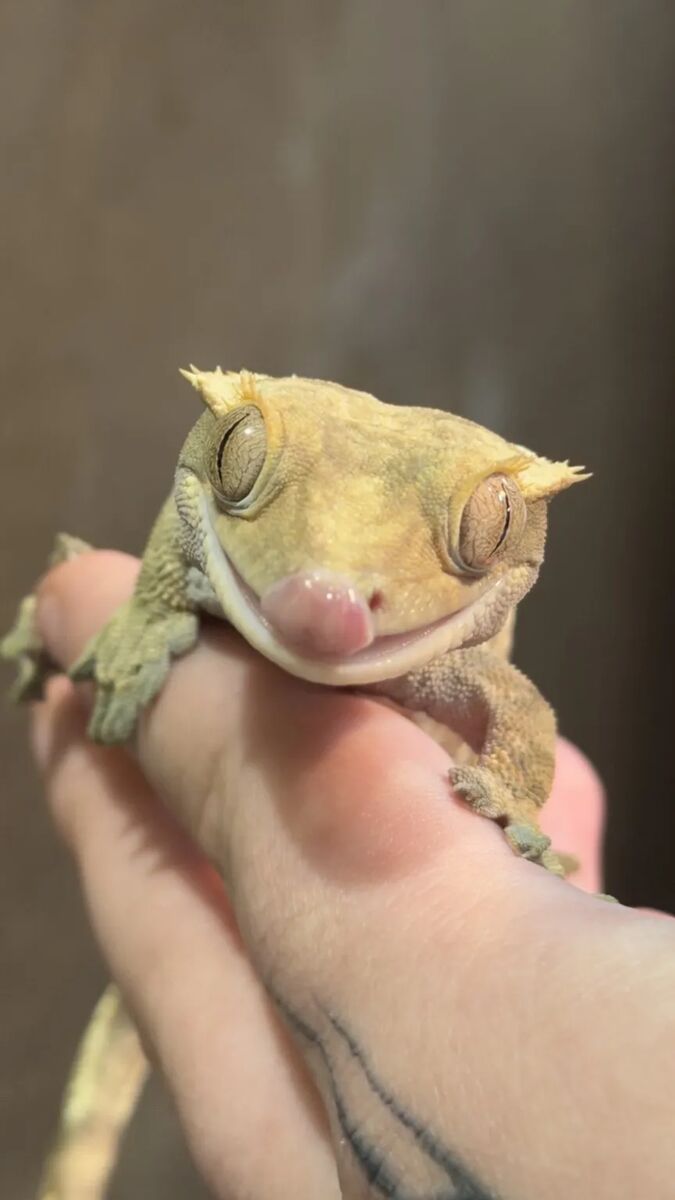
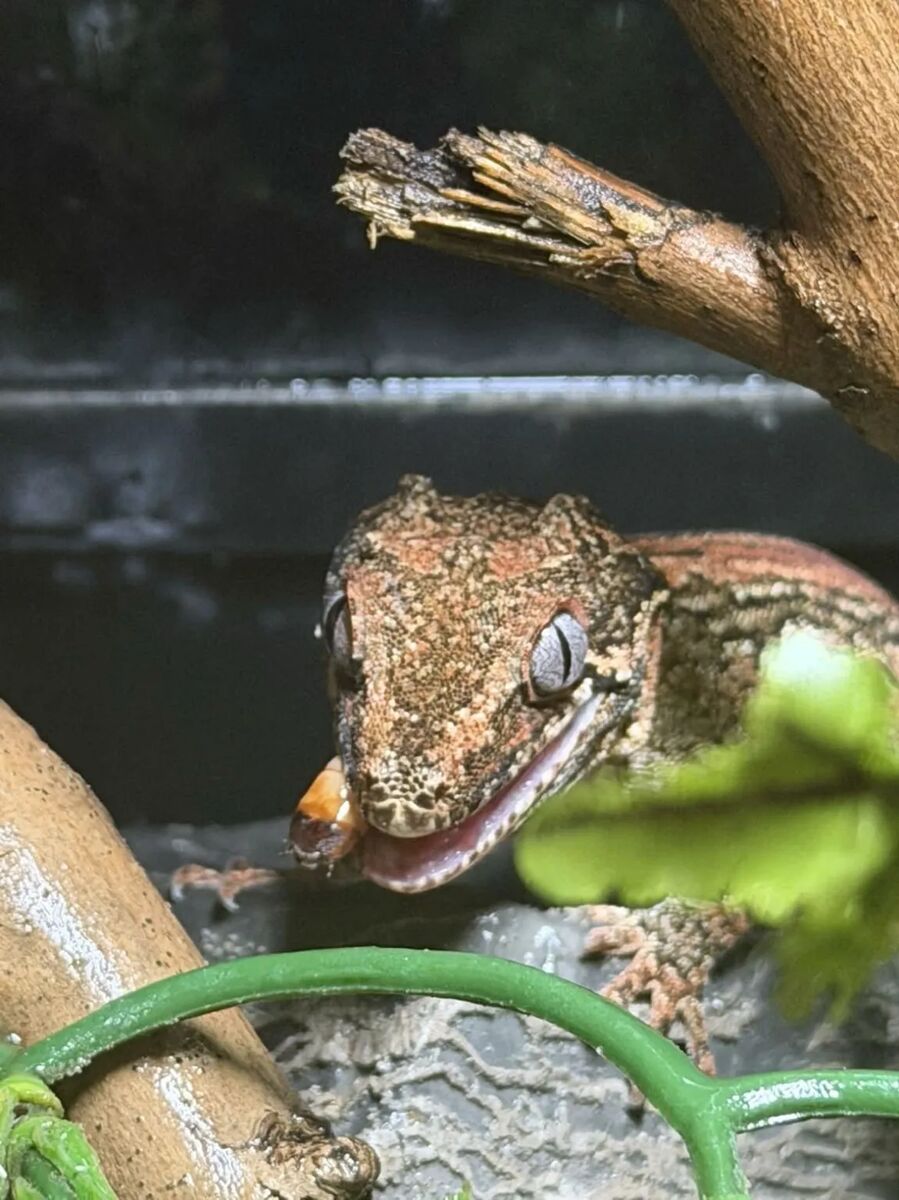
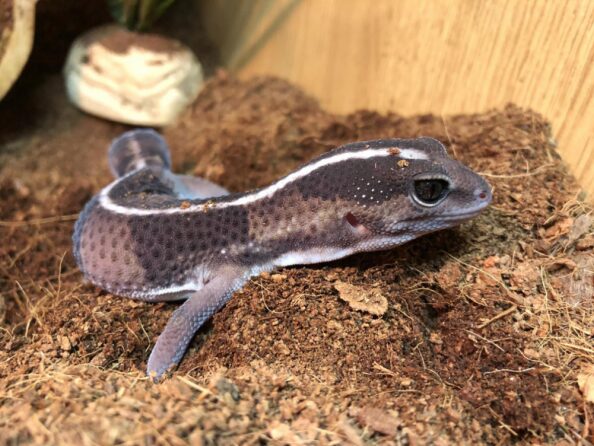
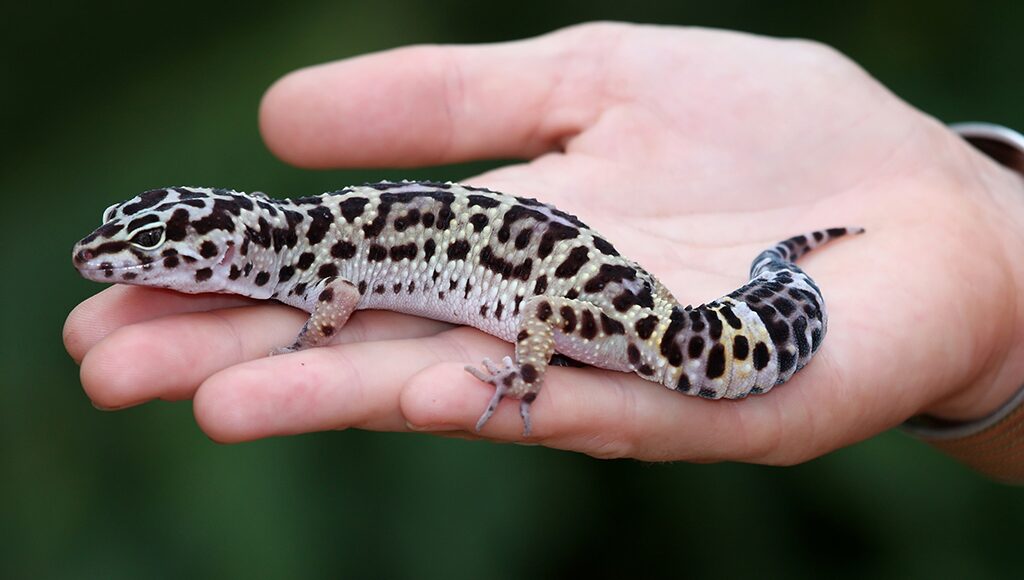
Leopard geckoEublepharis macularius
Leopard geckos are ground-dwelling geckos from the dry grasslands and semi-desert of Afghanistan, Pakistan, India and Nepal. Unlike most geckos they have eyelids and can't climb glass.
Enclosure
Adults need at least 90 × 45 × 45 cm (36 × 18 × 18 in). Floor space matters more than height.
Provide at least three hides: warm, cool and a humid hide. House singly; groups can lead to dropped tails and bite wounds.
Heating
Create a gradient from a 34–36°C basking surface down to 21–25°C at the cool end, with the warm hide around 32–33°C.
Overhead heat (a halogen basking lamp) on a thermostat is closest to natural. A nightly drop to as low as 16°C is healthier than constant heat.
Lighting & UVB
Low-level UVB (UVI 0.5–1.5) benefits leopard geckos. Albino and other low-pigment morphs need it lower, at 0.5–0.7 maximum.
Replace T5 UVB tubes every 12 months.
Humidity & water
Keep the enclosure at 30–40% humidity with good ventilation.
A humid hide (70–80%) with damp moss on the mid-to-cool side helps with shedding. Provide a shallow water dish.
Substrate & decor
A loose, naturalistic substrate such as a soil and sand mix lets them dig. Avoid calcium sand.
Add rocks, low branches and flat surfaces for basking.
Diet & feeding
Juveniles: feed daily. Young adults: every 2–3 days. Adults with a tail thicker than the neck: about every 5 days.
Offer about 2 appropriately sized insects per inch of body length, or what they'll eat in 15 minutes. Rotate at least three types: crickets, dubia roaches, mealworms, black soldier fly larvae, silkworms.
Waxworms, superworms and butterworms are fatty treats, about once a week at most. Remove uneaten insects.
Supplements
Dust all insects with calcium (with D3 if there's no UVB). Add a multivitamin weekly for juveniles and every other week for adults, unless your calcium already includes one.
Handling
Most leopard geckos tolerate gentle handling well. Never grab the tail: they can drop it, though it does grow back.
Health watch
Stuck shed on toes, weight loss or a thin tail, parasites, respiratory infection and "stick tail" are the common problems to look out for.
Every animal is an individual. Use this sheet as a starting point, measure temperatures and UVB properly, and speak to an exotic vet about any health concerns.
Last updated October 2026. Care guidance is subject to change as husbandry research develops.