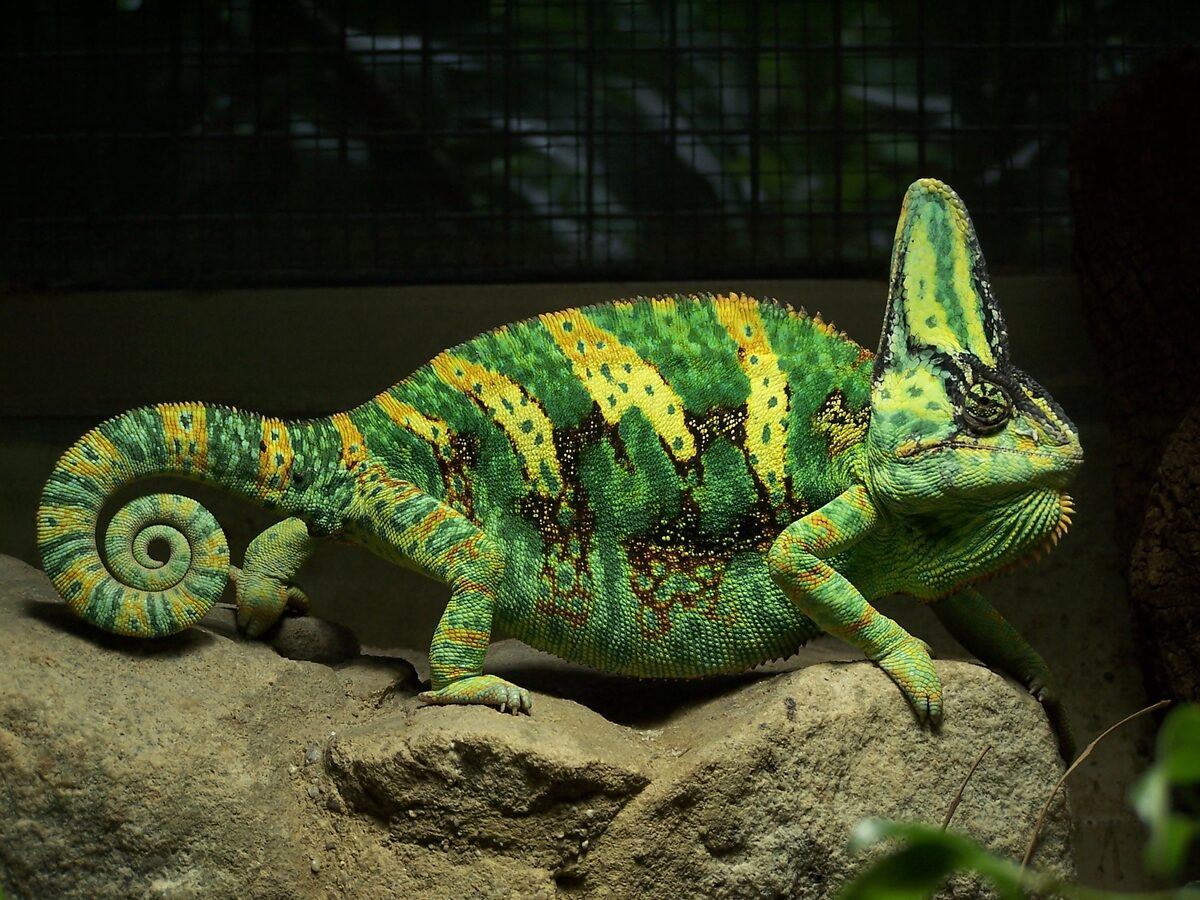
Veiled (Yemen) chameleonChamaeleo calyptratus
Veiled chameleons, also called Yemen chameleons, come from the mountain valleys of Yemen and southern Saudi Arabia. Males grow a tall casque on their heads. They're fascinating to watch but are a look-don't-touch species that needs careful humidity, hydration and UVB.
Enclosure
Chameleons need height and airflow: at least 60 × 60 × 120 cm for one adult, larger for big males. Fill it with live plants and branches at different heights.
Always house singly. Chameleons are solitary and get stressed just seeing another chameleon.
Heating
A basking spot around 29°C with the rest of the enclosure at 22–25°C. Nights can drop to 13–18°C, which is healthy for them. Use a thermostat.
Lighting & UVB
Provide UVB giving a UVI of about 3.0 at basking height, plus bright daylight lighting, on a 12-hour day.
Water & humidity
Chameleons rarely drink from a bowl. They drink droplets, so mist morning and evening (ideally with lights off) and use a dripper during the day.
Humidity should sit around 40–50% by day and rise to 80–100% at night, then dry out again so the enclosure doesn't stay wet.
Diet & feeding
Juveniles: as many insects as they'll eat, daily. Adults: 4–5 insects every other day.
Offer variety: dubia roaches, locusts, crickets, black soldier flies, silkworms, hornworms. Gutload insects for 2–3 days before feeding.
Supplements
Dust insects with calcium at most feeds and add a multivitamin with D3 roughly twice a month. Getting this balance right matters a lot for chameleons.
Handling
Chameleons are best treated as display animals. Let a new chameleon settle for 1–2 weeks, never grab it, and let it walk onto your hand if you need to move it.
Health watch
Dehydration (sunken eyes), metabolic bone disease, and egg-binding in females. A chameleon that hasn't eaten for two weeks needs an exotic vet.
Every animal is an individual. Use this sheet as a starting point, measure temperatures and UVB properly, and speak to an exotic vet about any health concerns.
Last updated October 2026. Care guidance is subject to change as husbandry research develops.