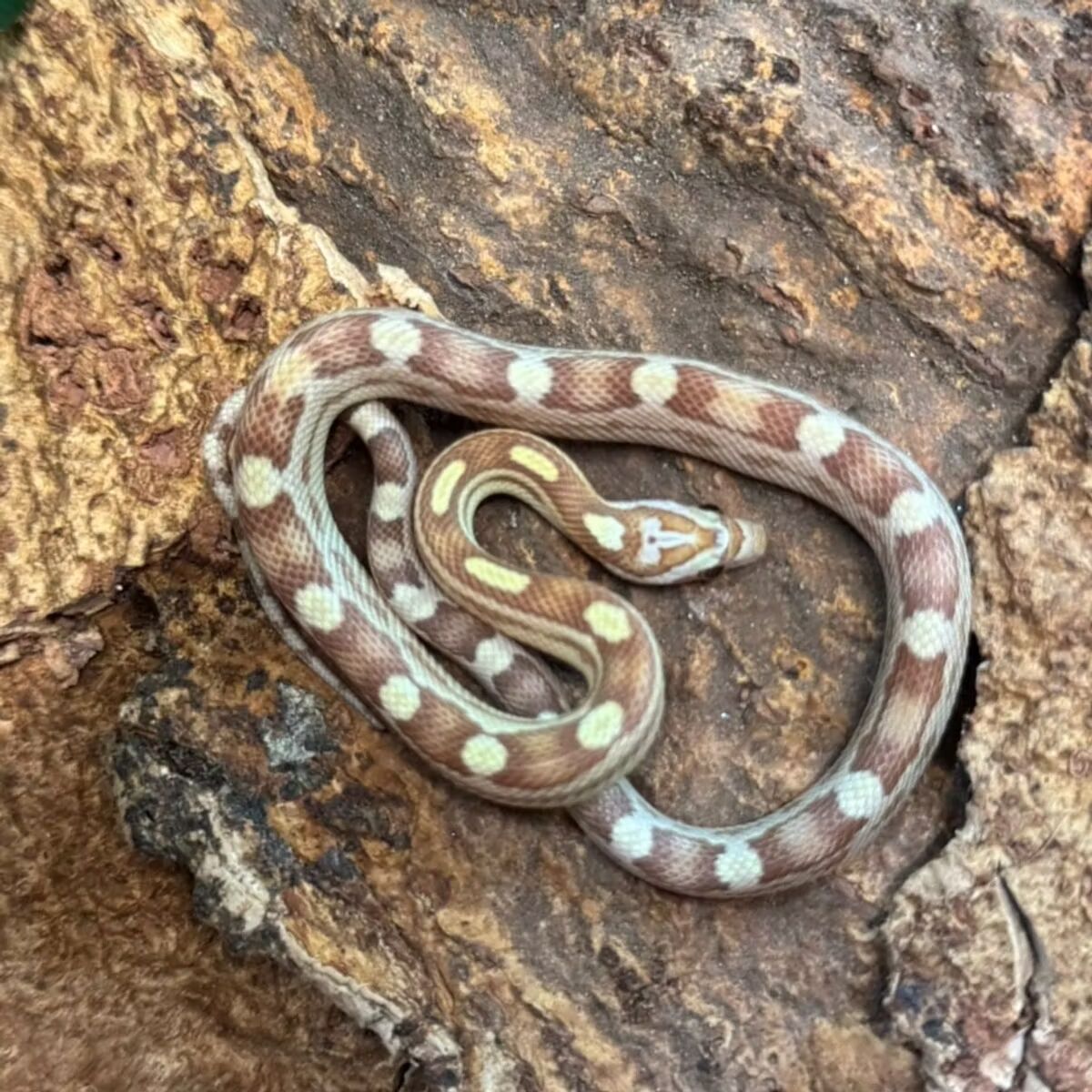
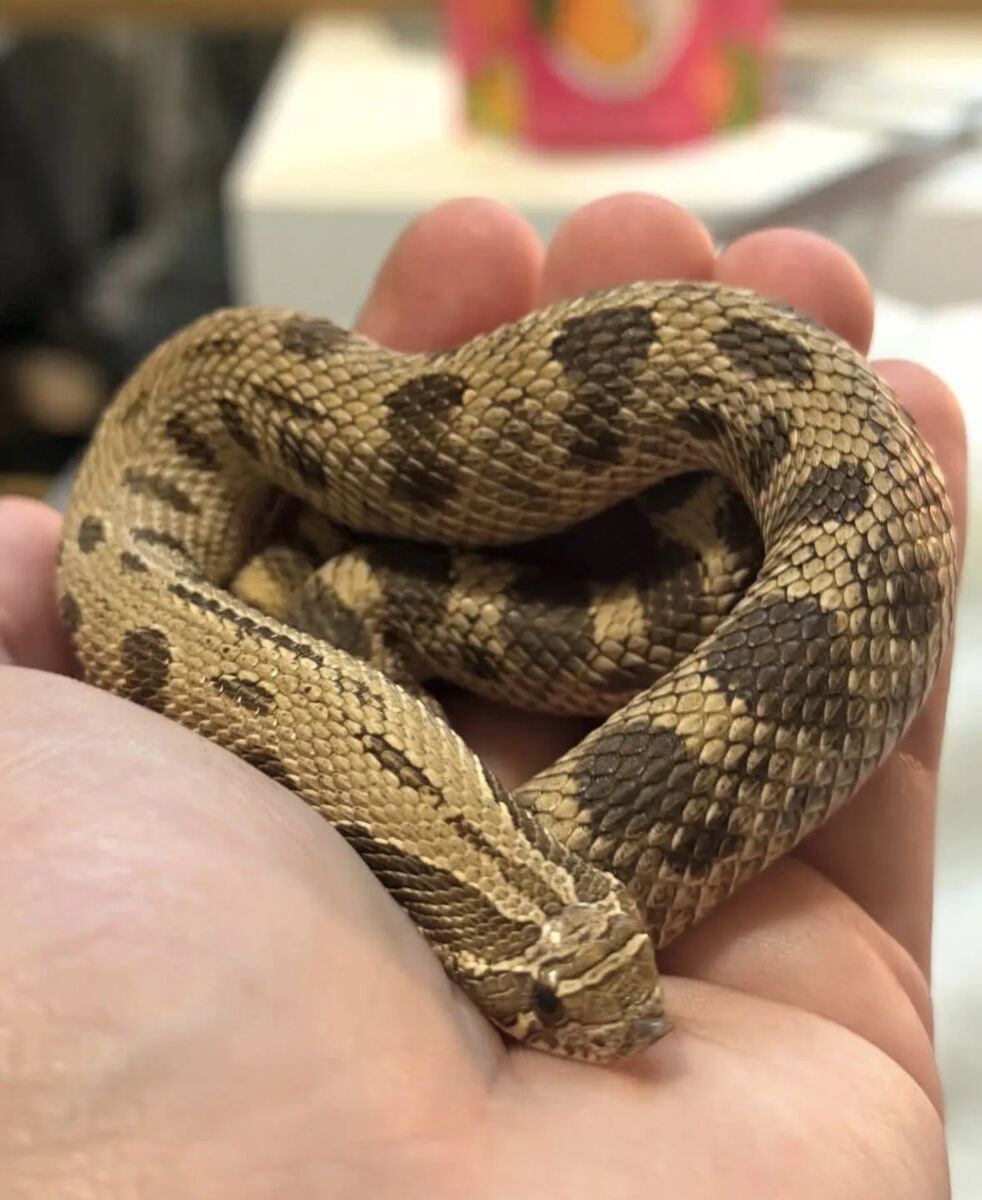
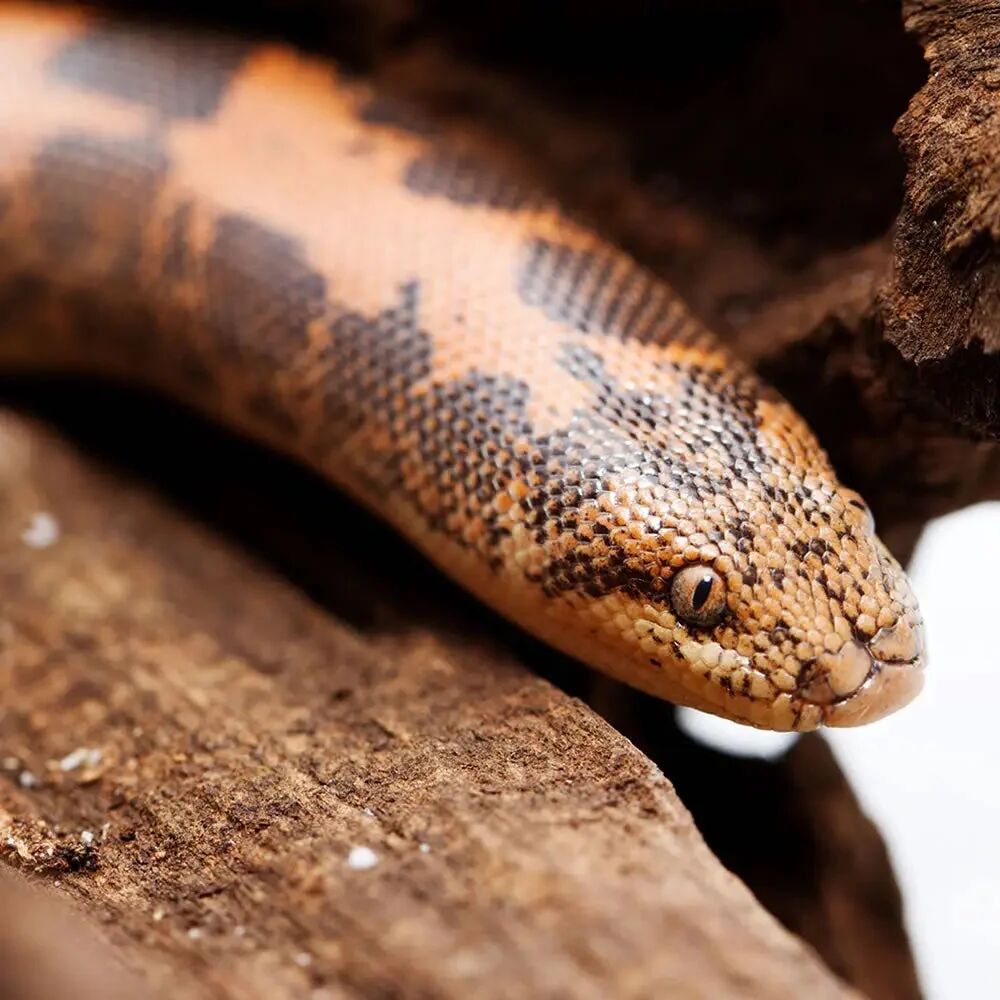
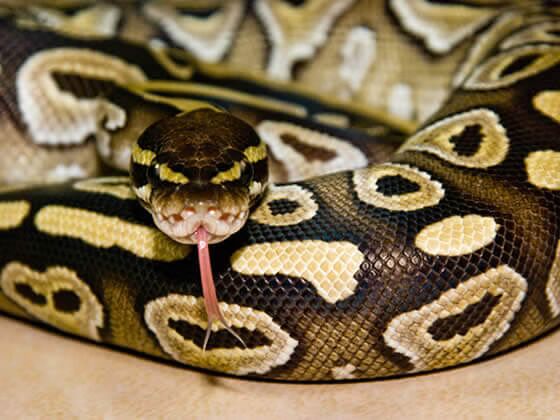
Royal python (ball python)Python regius
Royal pythons come from western and central Africa. They're calm, slow-moving constrictors that curl into a ball when nervous. They're popular, but they're a long commitment and can be fussy feeders.
Enclosure
Adults over about 90 cm need at least 120 × 60 × 60 cm (4 × 2 × 2 ft), and the enclosure should be at least as long as the snake.
Royals are solitary. House singly.
Heating
Keep the warm hide at 30–32°C and the cool hide at 22–27°C, with nights at 21–26°C. General air should never exceed 35°C. Use a thermostat.
Lighting & UVB
UVB at a UVI of 2.0–3.0 in the basking area is beneficial, on roughly a 12-hour day.
Humidity & water
Royals need high humidity: 60–80% by day, rising to 80–100% at night. A humid hide and moisture-holding substrate help.
Provide a large water bowl and change it every 2–3 days, or sooner if soiled.
Substrate & decor
Use a humidity-holding substrate such as coco husk or a soil mix. Give them tight-fitting hides on both ends and plenty of clutter: royals feel safest when covered.
Diet & feeding
Feed frozen-thawed rodents weighing about 10–15% of the snake's body weight. Adjust frequency to body condition rather than a fixed schedule.
Fasting is common, especially in winter or breeding season. Don't panic unless the snake loses more than 10% of its weight: weigh it regularly.
Supplements
An occasional light dusting with an all-in-one calcium and vitamin powder is optional.
Handling
Usually gentle. Let them settle for a week or two before handling, and avoid handling for 48 hours after a meal.
Health watch
Respiratory infections (often from low temperatures), stuck shed (low humidity), mites and long fasts with weight loss.
Every animal is an individual. Use this sheet as a starting point, measure temperatures and UVB properly, and speak to an exotic vet about any health concerns.
Last updated October 2026. Care guidance is subject to change as husbandry research develops.