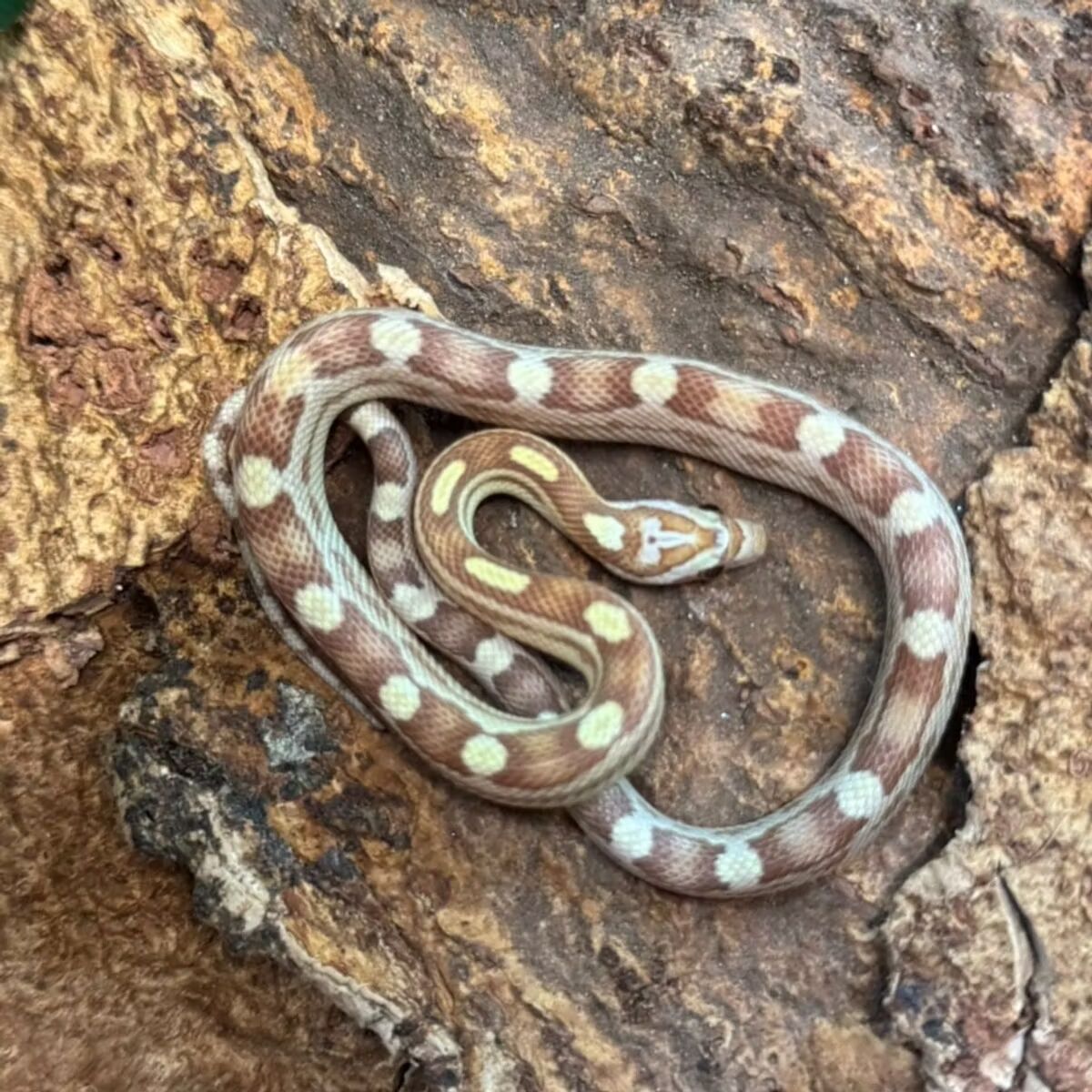
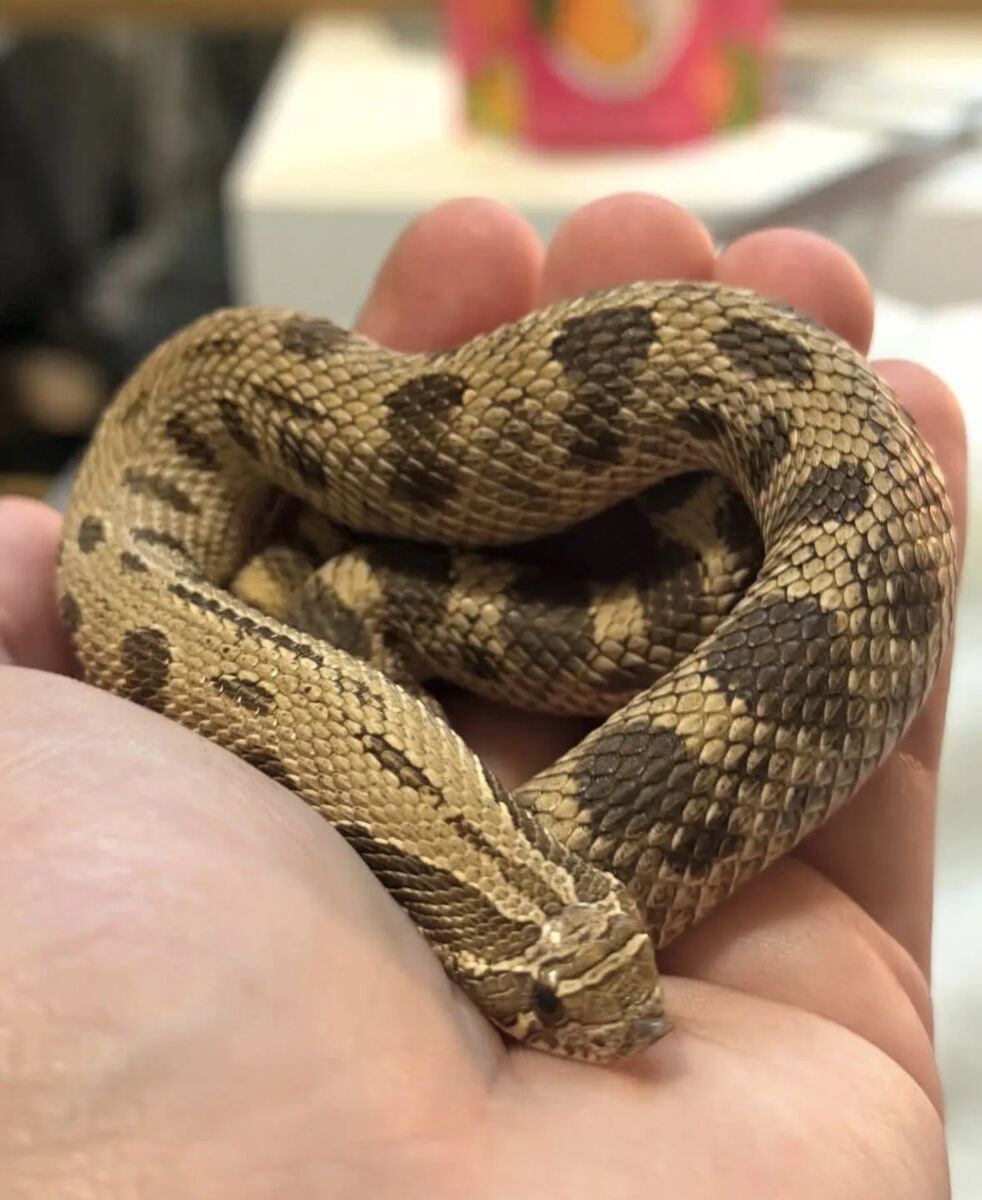
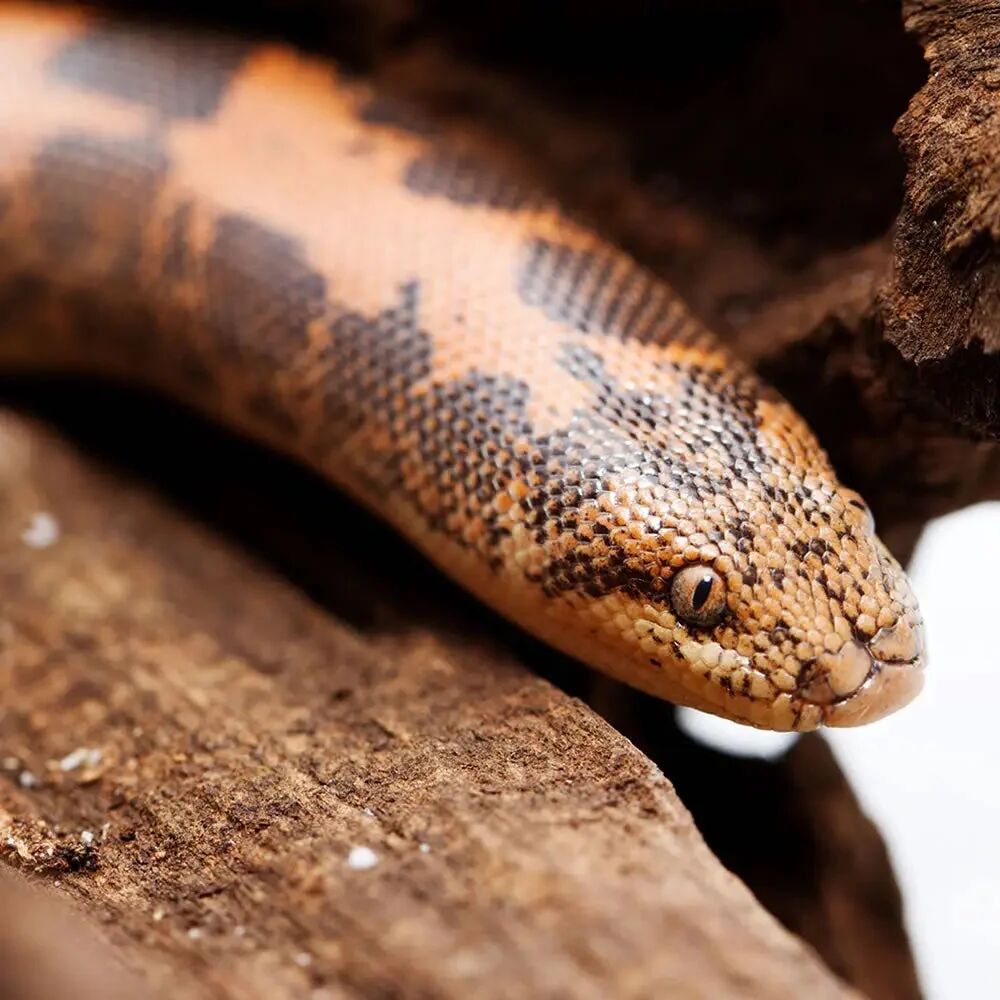
Kenyan sand boaEryx colubrinus
Kenyan sand boas are small, stout boas from the dry regions of East and North-East Africa. They spend most of their time buried in sand, waiting to ambush prey.
Enclosure
Adults need at least 60 × 30 × 30 cm, with more space for large females. Floor space and substrate depth matter most.
Heating
Provide a basking surface of 34–35°C and a cool zone of 26–28°C. Heating can be switched off at night.
Lighting & UVB
Low-to-moderate UVB at a UVI of 2.0–3.0 in the basking area, on a 12-hour day.
Humidity & water
Keep the enclosure mostly dry, with a humid hide (damp moss) on the cool side and occasional light misting. Provide a shallow water dish.
Substrate & decor
They need deep, loose substrate to burrow in: reptile sand or a soil and sand mix, at least 7.5–10 cm (3–4 in) deep. Add flat rocks and a couple of hides.
Diet & feeding
Feed frozen-thawed prey about as wide as the snake's thickest point. Juveniles every 1–2 weeks, adults every 2–4 weeks.
Handling
Usually calm. Tap the substrate before reaching in, as a buried sand boa may mistake a hand for food.
Start with short sessions once the snake is eating regularly.
Health watch
Respiratory infection from damp, cold conditions, obesity and retained shed.
Every animal is an individual. Use this sheet as a starting point, measure temperatures and UVB properly, and speak to an exotic vet about any health concerns.
Last updated October 2026. Care guidance is subject to change as husbandry research develops.