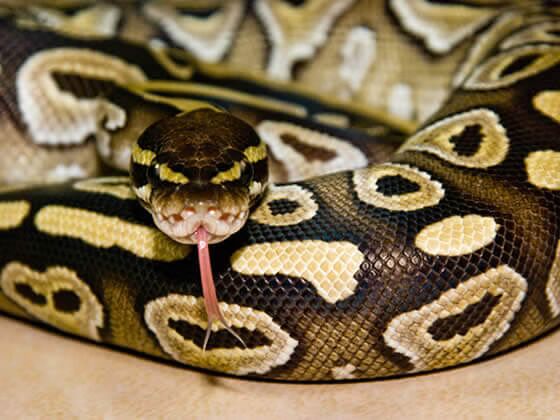
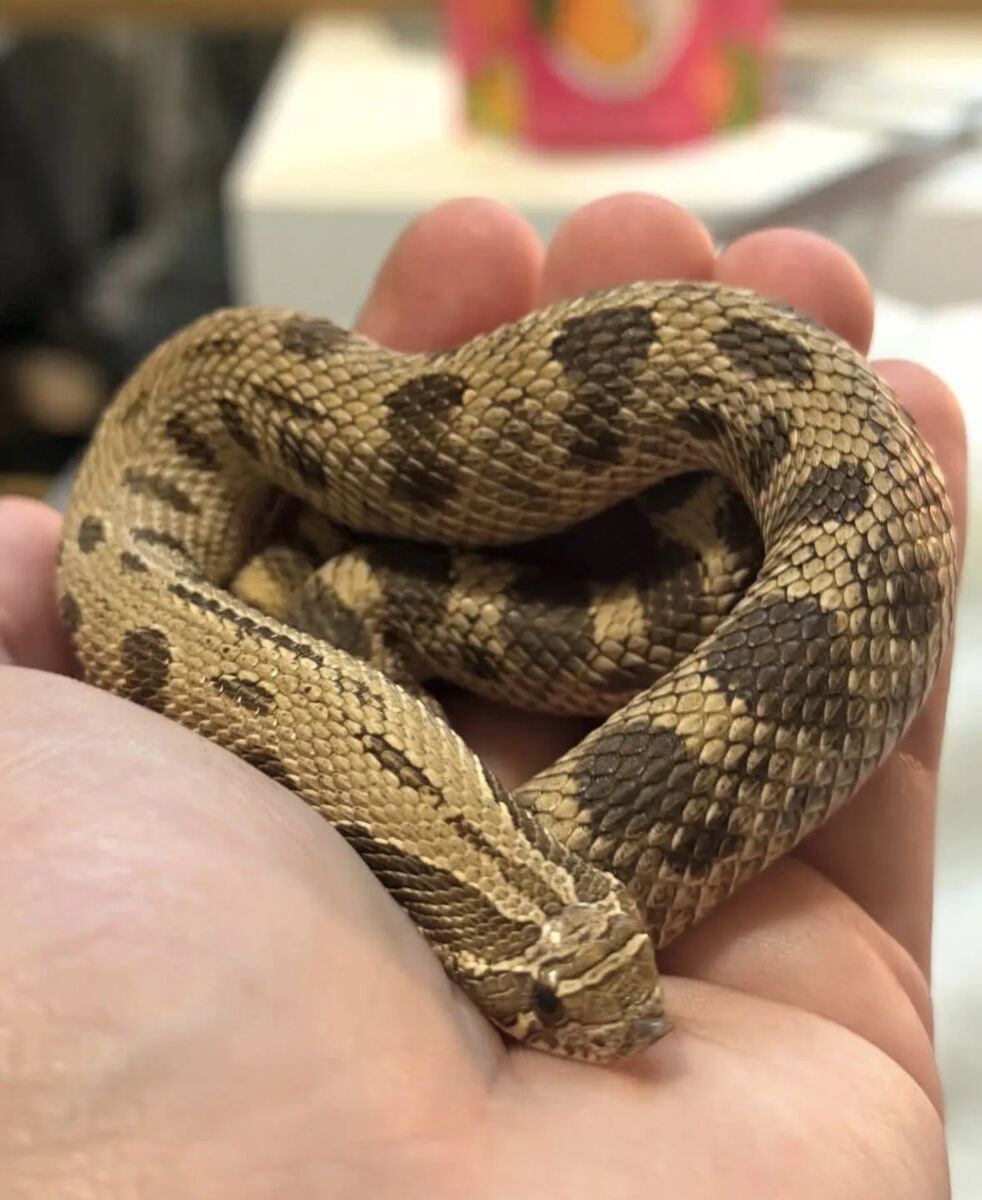
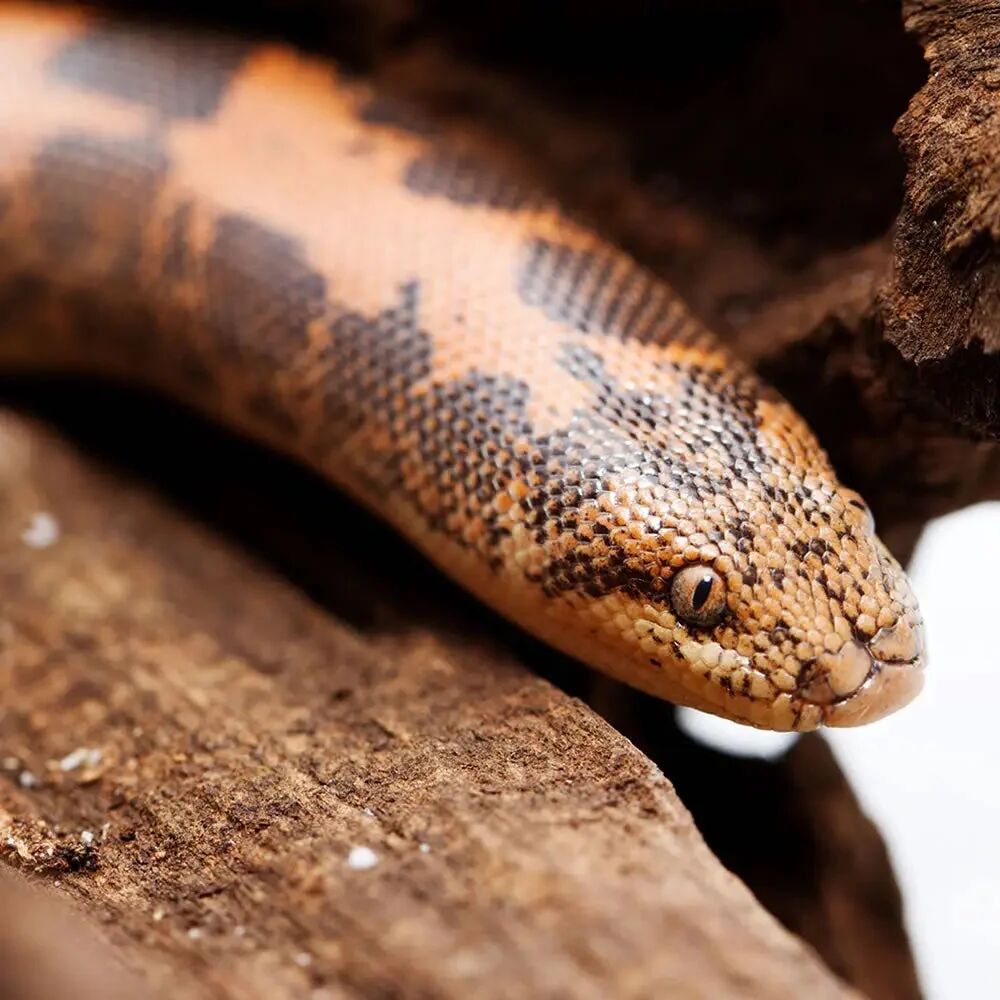
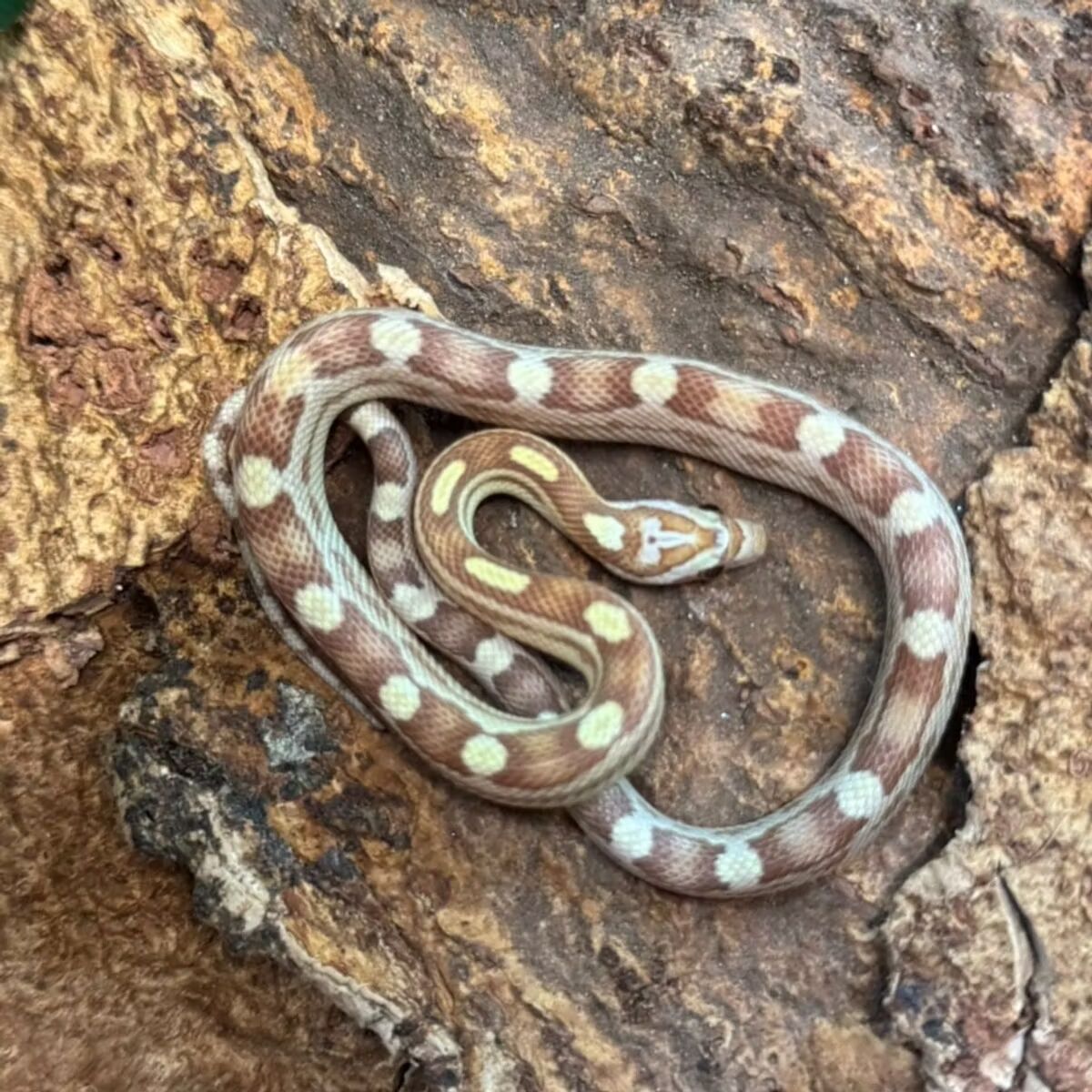
Corn snakePantherophis guttatus
Corn snakes are slender, active colubrids from the south-eastern United States. They come in a huge range of colours, are usually reliable feeders and are a great first snake.
Enclosure
Adults need at least 120 × 60 × 60 cm (4 × 2 × 2 ft). A good rule: as long as the snake, half as wide and at least 60 cm tall. Corn snakes climb, so taller is welcome.
House singly.
Heating
Provide a basking surface around 32°C (90°F) with a cool zone of 24–27°C. Heat can go off at night for adults, but keep hatchlings warmer.
Always use a thermostat.
Lighting & UVB
UVB benefits corn snakes: aim for a UVI of 2.0–3.0 in the basking area, on a 12-hour day. Replace tubes every 12 months.
Humidity & water
Average humidity of 65–75%. A humid hide helps with shedding.
Keep a large, heavy water bowl in at all times and change the water daily.
Substrate & decor
Use a burrowing-friendly substrate such as a soil mix or aspen. Add at least two hides (warm and cool), branches to climb and plenty of cover.
Diet & feeding
Feed frozen-thawed mice or small rats about 1–1.5 times the width of the snake's thickest point.
Hatchlings: every 5–7 days. Juveniles: every 7–10 days. Adults: every 14–21 days.
Thaw prey in the fridge, then warm it in a sealed bag in warm water before offering with tongs.
Supplements
Whole prey covers most needs. A light, occasional dusting with an all-in-one calcium and vitamin supplement is optional.
Handling
Corn snakes are usually docile. Wait 48 hours after feeding, and support the body rather than gripping.
Health watch
Watch for stuck shed, mites, respiratory infection (wheezing, bubbles at the nose) and regurgitation.
Every animal is an individual. Use this sheet as a starting point, measure temperatures and UVB properly, and speak to an exotic vet about any health concerns.
Last updated October 2026. Care guidance is subject to change as husbandry research develops.