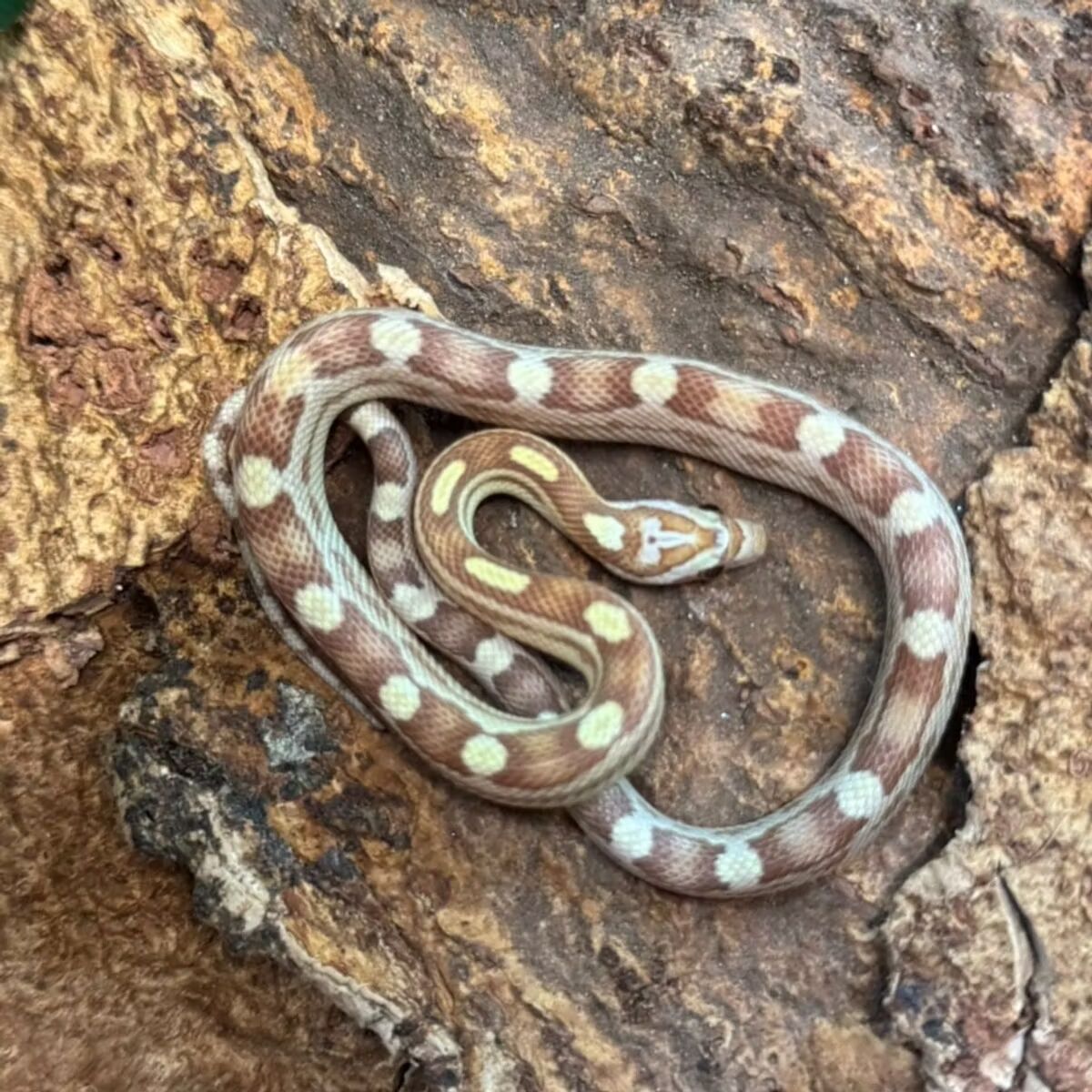
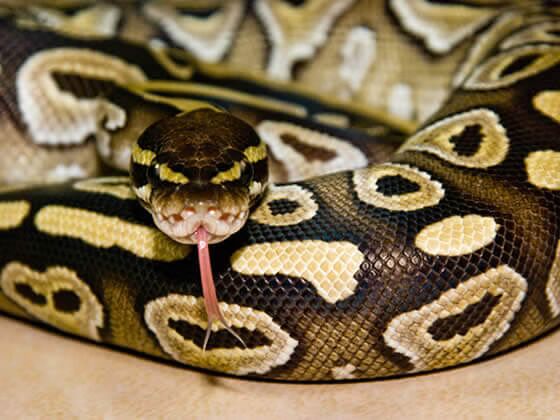
KingsnakeLampropeltis spp.
Kingsnakes are hardy, active North American snakes with bold patterns. They're named for eating other snakes, so they must always live alone.
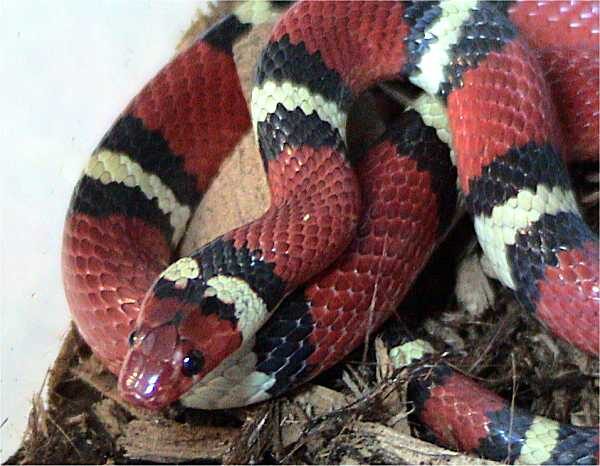
Enclosure
At least 120 × 60 × 60 cm, larger for species over 1.2 m. One snake per enclosure: kingsnakes eat other snakes.
Heating
Basking surface 29–32°C with a cool side of 21–26°C. Heating can go off at night.
Lighting & UVB
UVB at a UVI of 2.0–3.0 in the basking area, on a 12-hour day.
Humidity & water
Average humidity of 40–60%, with a humid hide for shedding and a large water bowl.
Substrate
A soil-based substrate around 10 cm deep. Remove waste daily and fully replace every 3–4 months.
Diet & feeding
Frozen-thawed whole prey up to 1.5 times the snake's widest point. Hatchlings every 5–7 days, juveniles every 7–10 days, adults every 10–14 days.
Kingsnakes are enthusiastic feeders. Use tongs and wash your hands so they don't mistake you for food.
Handling
Wait about 2 weeks for a new snake to settle. Start with short sessions and lift from below.
Health watch
Mites, stuck shed and obesity from overfeeding.
Every animal is an individual. Use this sheet as a starting point, measure temperatures and UVB properly, and speak to an exotic vet about any health concerns.
Last updated October 2026. Care guidance is subject to change as husbandry research develops.