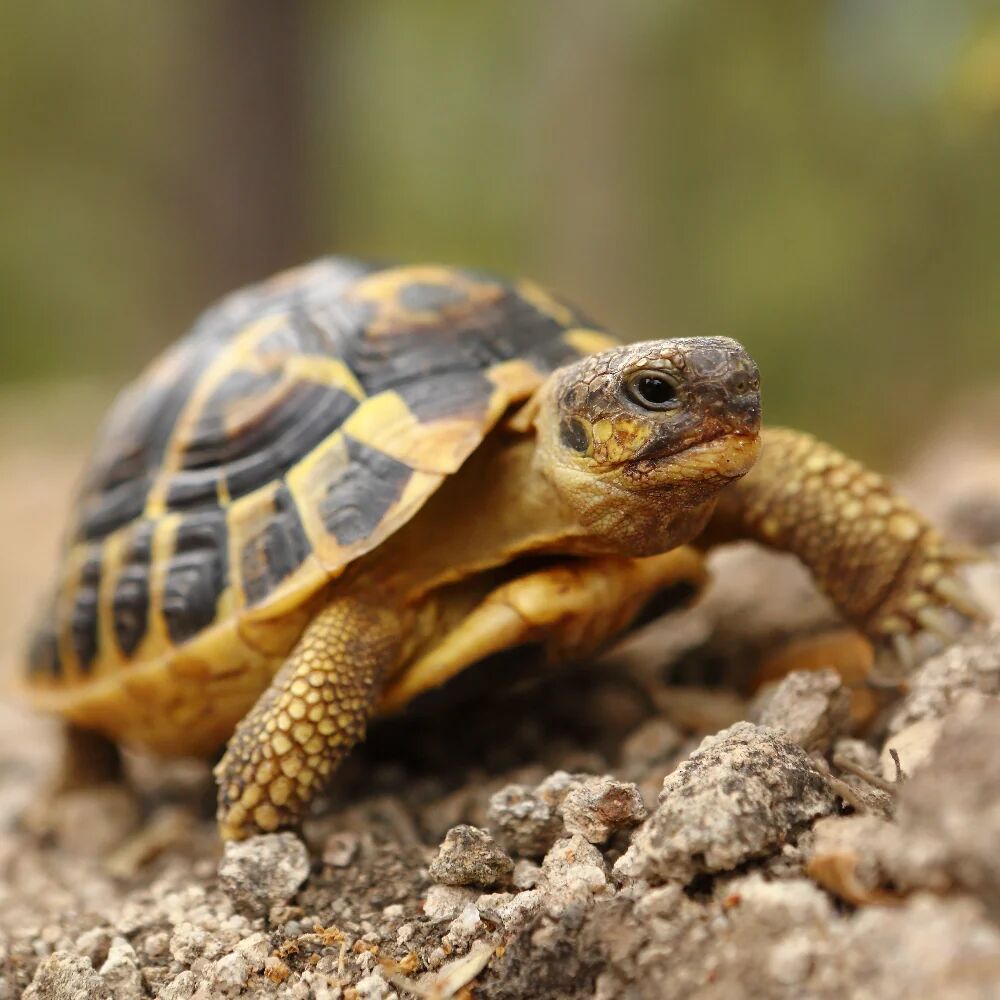
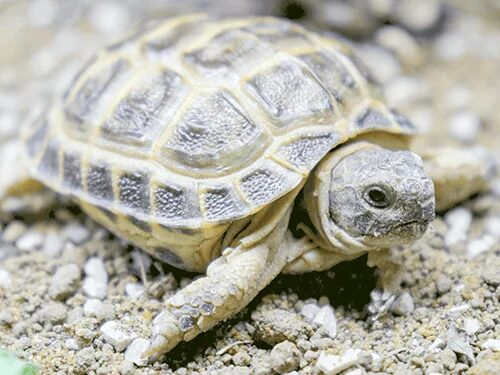
Horsfield's tortoiseTestudo horsfieldii
Horsfield's (Russian) tortoises come from the dry steppes of Central Asia. They're small, tough, keen diggers and one of the most common tortoises in UK homes.
Housing
Floor space is everything. One adult needs at least 2.1 × 1.1 m indoors; outdoor enclosures in warm weather are ideal. Use an open-topped table, not a glass tank.
Heating
Basking spot around 35°C, cool side 24–29°C.
Lighting & UVB
Strong UVB is essential: a T5 HO 10–12% tube giving a UVI of 3.0–4.0 in the basking area.
Substrate & humidity
They're keen diggers, so give them a well-drained soil and sand mix at least 15 cm deep. Provide a humid hide; soak juveniles in shallow lukewarm water twice a week.
Diet
A high-fibre diet of weeds, leafy greens and grasses, with flowers as treats. Fruit and insects should be rare.
Feed brassicas and spinach only occasionally.
Supplements
A multivitamin on food and a cuttlefish bone for calcium and beak wear.
Hibernation
Like Hermann's tortoises, Horsfield's hibernate in winter. Only hibernate a healthy tortoise after a vet check, at a stable 3–7°C.
Handling
Tortoises don't enjoy being picked up. Scoop from below, support with both hands and keep low: falls cause serious injuries.
Every animal is an individual. Use this sheet as a starting point, measure temperatures and UVB properly, and speak to an exotic vet about any health concerns.
Last updated October 2026. Care guidance is subject to change as husbandry research develops.