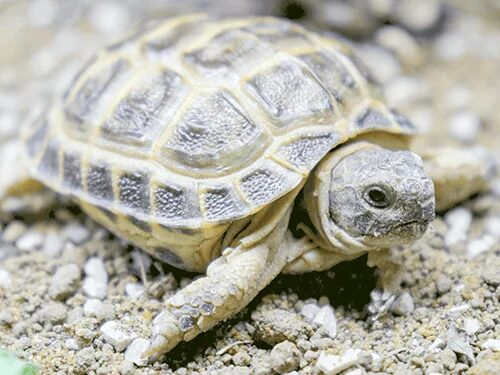
Hermann's tortoiseTestudo hermanni
Hermann's tortoises are Mediterranean tortoises from southern Europe. They're herbivores that graze on weeds, need plenty of floor space, natural sunlight when possible and very careful hibernation.
Housing
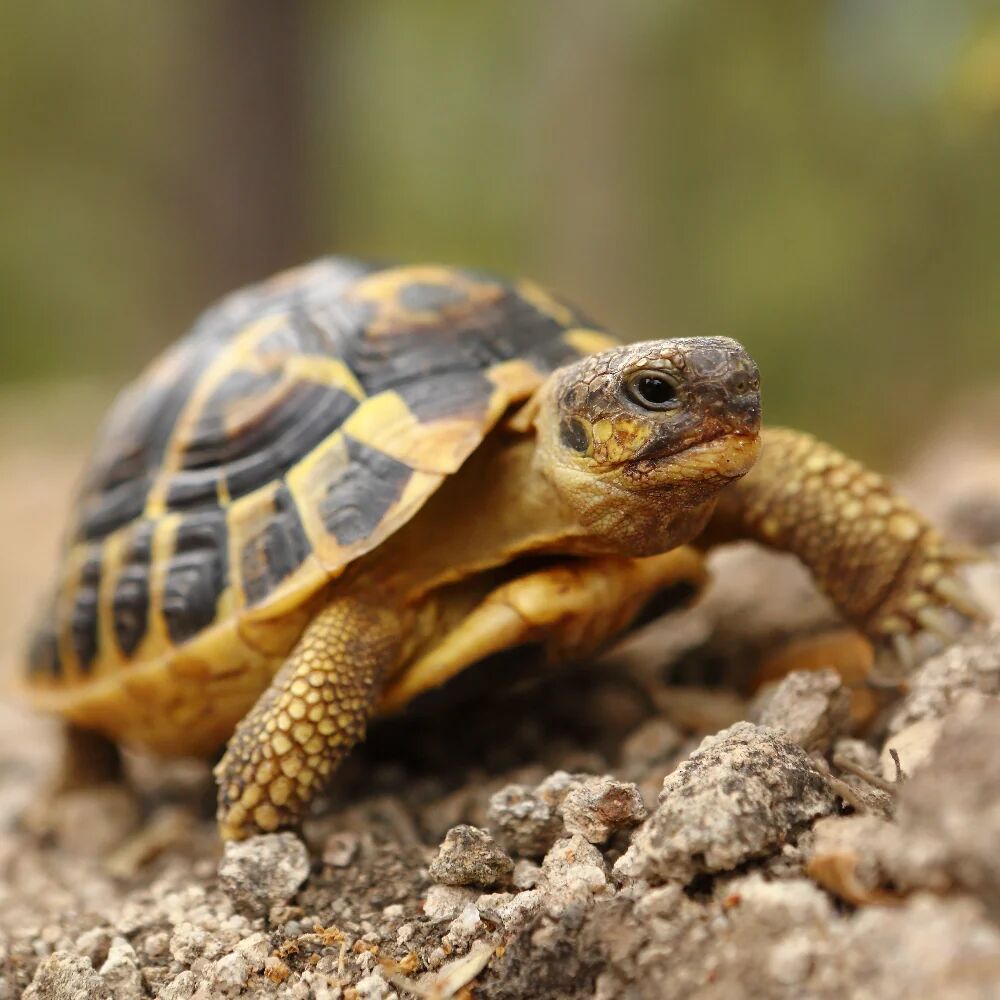
Tortoises need floor space, not height. Indoors, provide a large open-topped table rather than a glass tank, which overheats and lacks airflow.
In warm weather, a secure outdoor run with sun, shade and shelter is ideal. Tortoises with access to natural sunlight still need a heated shelter.
Heating
Provide a basking spot of 35–40°C with the rest of the enclosure at 24–29°C. Heating and lighting can go off at night indoors.
Lighting & UVB
UVB is essential. Use a T5 HO 10–12% tube over the basking area, around half the length of the enclosure, on a 10–14 hour day depending on the season.
Humidity & water
Adults need relatively dry conditions with a humid hide. Hatchlings need higher humidity.
Provide a shallow water dish they can walk into, and bathe them in shallow lukewarm water regularly to encourage drinking.
Substrate
A soil and play sand mix at least 15 cm (6 in) deep lets them dig. Spot clean daily.
Diet & feeding
Feed a varied, high-fibre diet of weeds and leaves: dandelion, plantain, clover, sow thistle, hawkbit and chickweed, plus flowers.
Avoid fruit, cereals, meat and supermarket salads as staples. They're too rich and can cause health problems.
Supplements
Lightly dust food with a calcium supplement. A cuttlefish bone gives extra calcium and helps keep the beak trim.
Hibernation
Hermann's tortoises hibernate in winter, but it must be done correctly. Only hibernate a healthy tortoise after a pre-hibernation vet check.
Temperatures should stay stable at around 5°C (between about 3 and 7°C). A dedicated fridge with a thermometer is the most reliable method. Speak to an exotic vet before your tortoise's first hibernation with you.
Health watch
Shell pyramiding, respiratory infection (runny nose, wheezing), weight loss before or after hibernation and a soft shell (metabolic bone disease).
Every animal is an individual. Use this sheet as a starting point, measure temperatures and UVB properly, and speak to an exotic vet about any health concerns.
Last updated October 2026. Care guidance is subject to change as husbandry research develops.