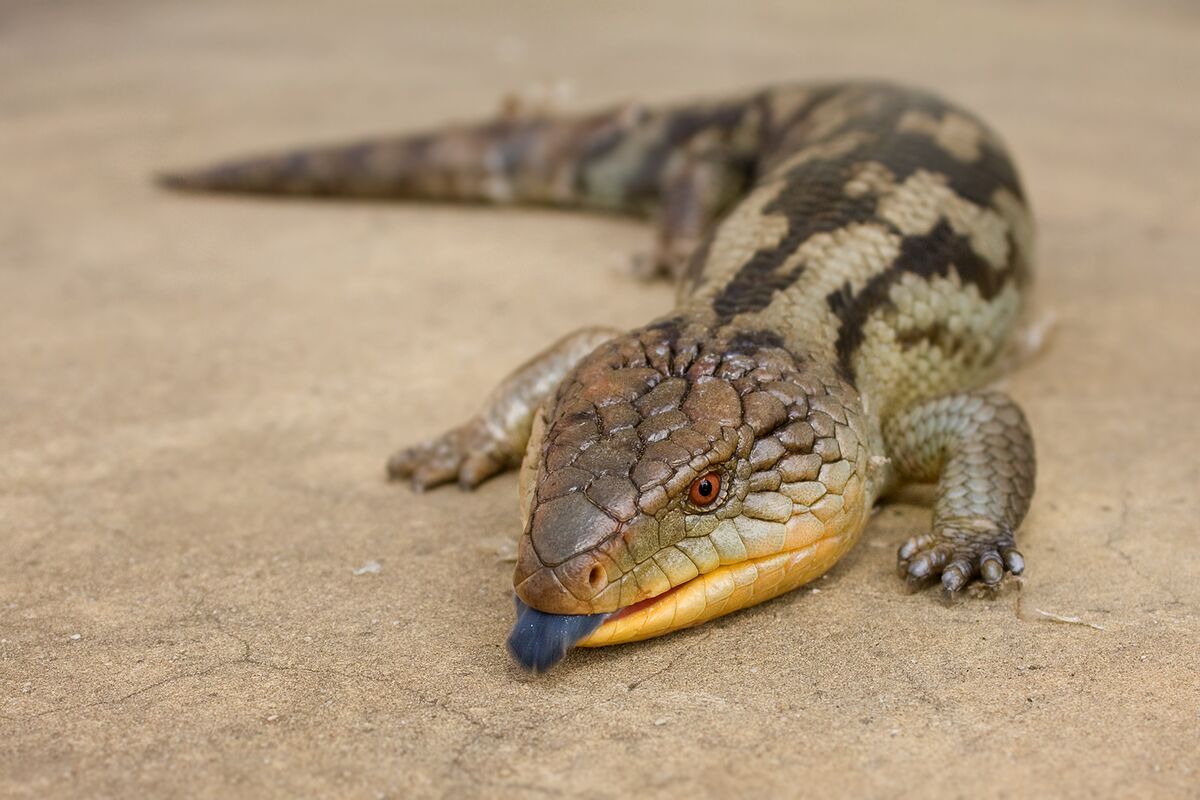
Northern blue tongue skinkTiliqua scincoides intermedia
Northern blue tongue skinks come from the tropical woodlands and grasslands of northern Australia. They're heavy-bodied, ground-dwelling lizards with a bright blue tongue they flash to scare off predators. They're curious, sturdy and often very handleable.
Enclosure
Adults need at least 183 × 61 × 61 cm (6 × 2 × 2 ft). Floor space matters most: blue tongues are ground-dwellers, not climbers.
Never house more than one skink per enclosure. They're territorial and can seriously injure each other.
Heating
Northern blue tongues need a hot basking surface of 40–46°C, with the cool side at 21–29°C. Nights can drop to 18–24°C.
Use halogen basking bulbs on a dimming thermostat and check surface temperatures with a temperature gun.
Lighting & UVB
Provide a T5 HO UVB tube giving a UVI of 3.0–4.0 in the basking area, with nothing blocking it. Keep the skink at least 25 cm (10 in) from the bulb and replace tubes every 12 months.
Humidity & water
Keep humidity at 40–60% for northern blue tongues. Indonesian blue tongues need more, at 60–80%.
Provide a large, shallow water bowl, no more than about 7.5 cm (3 in) deep, and change it daily.
Substrate & decor
A deep, diggable substrate such as a soil and sand mix lets them burrow. Add a hide at each end, flat rocks and a sturdy basking platform.
Diet & feeding
Blue tongues are omnivores. Juveniles need about 70–80% protein; adults about 50–60% protein and 40–50% vegetables, with fruit kept to 10% or less.
Feed daily up to 3 months, 3 times a week from 3–8 months, then 1–2 times a week as adults. A meal is roughly the size of the skink's head.
Good foods include roaches, locusts, snails, quality wet dog food (for adults), squash, leafy greens and berries. Avoid avocado, onion, citrus and rhubarb.
Supplements
Add calcium to insects and home-made meals. Fortified prepared reptile diets don't need extra calcium or multivitamins on top.
Handling
Usually calm once settled. Support the whole body close to the ground: they're heavy and can be hurt by a fall.
Health watch
Obesity, stuck shed on toes and tail tips, respiratory infection (often from incorrect humidity) and metabolic bone disease from poor UVB or calcium.
Every animal is an individual. Use this sheet as a starting point, measure temperatures and UVB properly, and speak to an exotic vet about any health concerns.
Last updated October 2026. Care guidance is subject to change as husbandry research develops.