Ackie monitorVaranus acanthurus
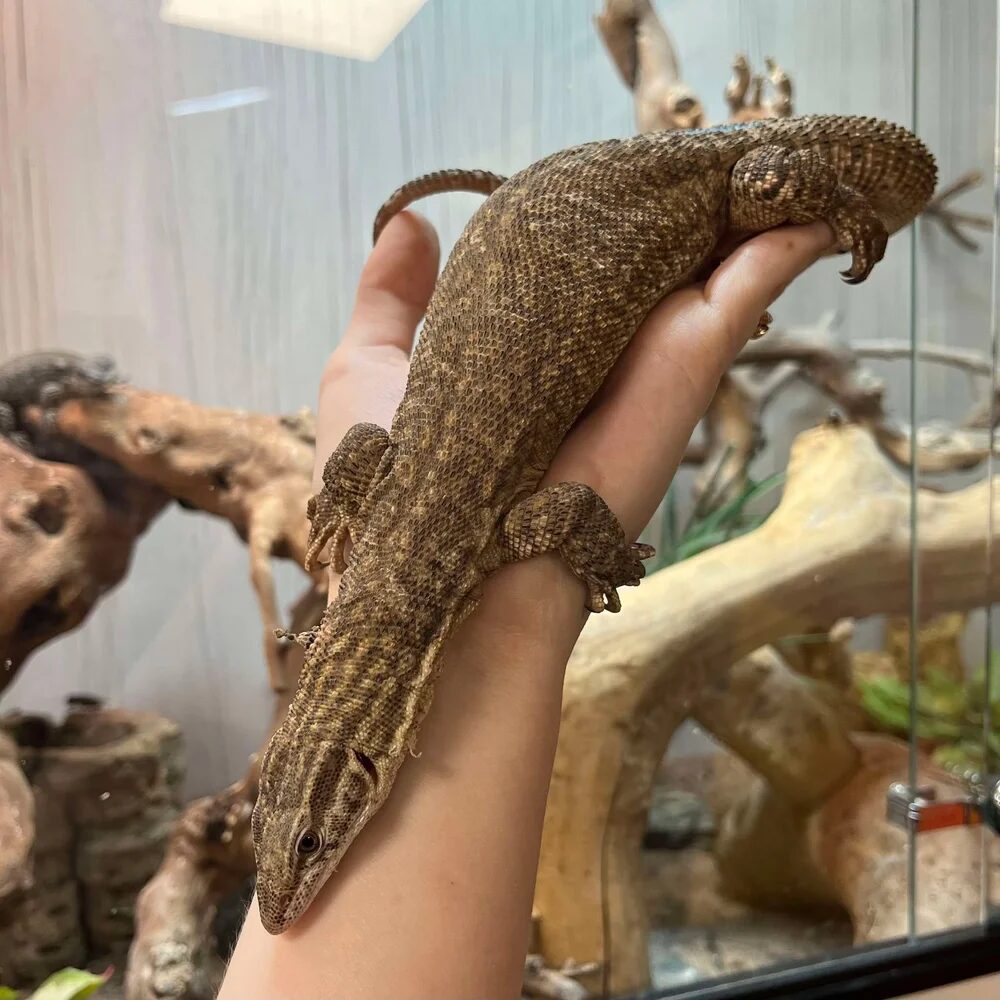
Ackies (spiny-tailed monitors) are small, intelligent monitor lizards from the rocky, arid north of Australia. They're active, curious and fun to watch, but need a large, tall enclosure, very deep substrate and some of the hottest basking spots of any pet lizard.
Enclosure
One adult needs at least 152 × 76 × 122 cm (5 × 2.5 × 4 ft), and bigger is better. Height lets you fit the very deep substrate ackies need.
Keep one per enclosure. Males fight and can kill each other, females can clash too, and ackies will eat smaller ackies.
Heating
Ackies need an extremely hot basking surface of 70–78°C, measured with an infrared temperature gun a couple of hours after the basking rock has warmed up. Use stacked flat rocks under powerful halogen floods so the surface heats through.
Warm side air should be 29–38°C and the cool side 24–28°C. Turn heating off at night.
Lighting & UVB
Strong UVB is essential: aim for a UVI of 4.0–6.0 at basking height using a T5 HO 12% or 14% tube about half the enclosure length. Run lights for about 12 hours (10.5–13.5 if you follow the seasons).
Substrate & humidity
Ackies are diggers and need a soil and sand mix at least 30–45 cm deep that holds a burrow without collapsing. Keep the surface fairly dry but the lower layers slightly damp.
Air humidity of 20–50% is fine, as long as the burrows underneath stay humid.
Diet & feeding
Ackies are insectivores. Feed gutloaded insects such as roaches, crickets, black soldier fly larvae, hornworms and superworms, about head-sized.
Hatchlings and juveniles (up to 6 months): daily, as much as they'll eat. Subadults and adults: every other day, what they eat in 5–10 minutes.
Quail eggs, frozen-thawed feeder lizards or the occasional young mouse are treats only: too much rich food leads to obesity.
Supplements
Lightly dust insects with calcium. Use a multivitamin occasionally (with vitamin A as retinol). Good UVB should cover vitamin D3.
Handling
Ackies are clever and often become tolerant of handling with patience, but they're fast and can bite and scratch. Build trust gradually with tong-feeding and short sessions.
Health watch
Metabolic bone disease from poor UVB or calcium, obesity from too much rich food, stuck shed from low burrow humidity, and injuries from cohabiting.
Every animal is an individual. Use this sheet as a starting point, measure temperatures and UVB properly, and speak to an exotic vet about any health concerns.
Last updated October 2026. Care guidance is subject to change as husbandry research develops.