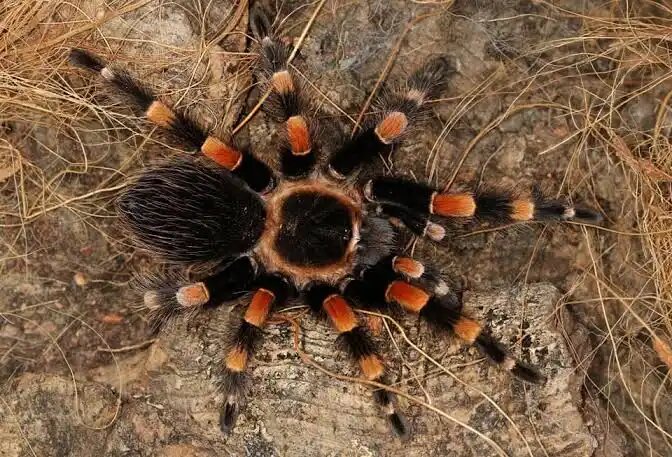
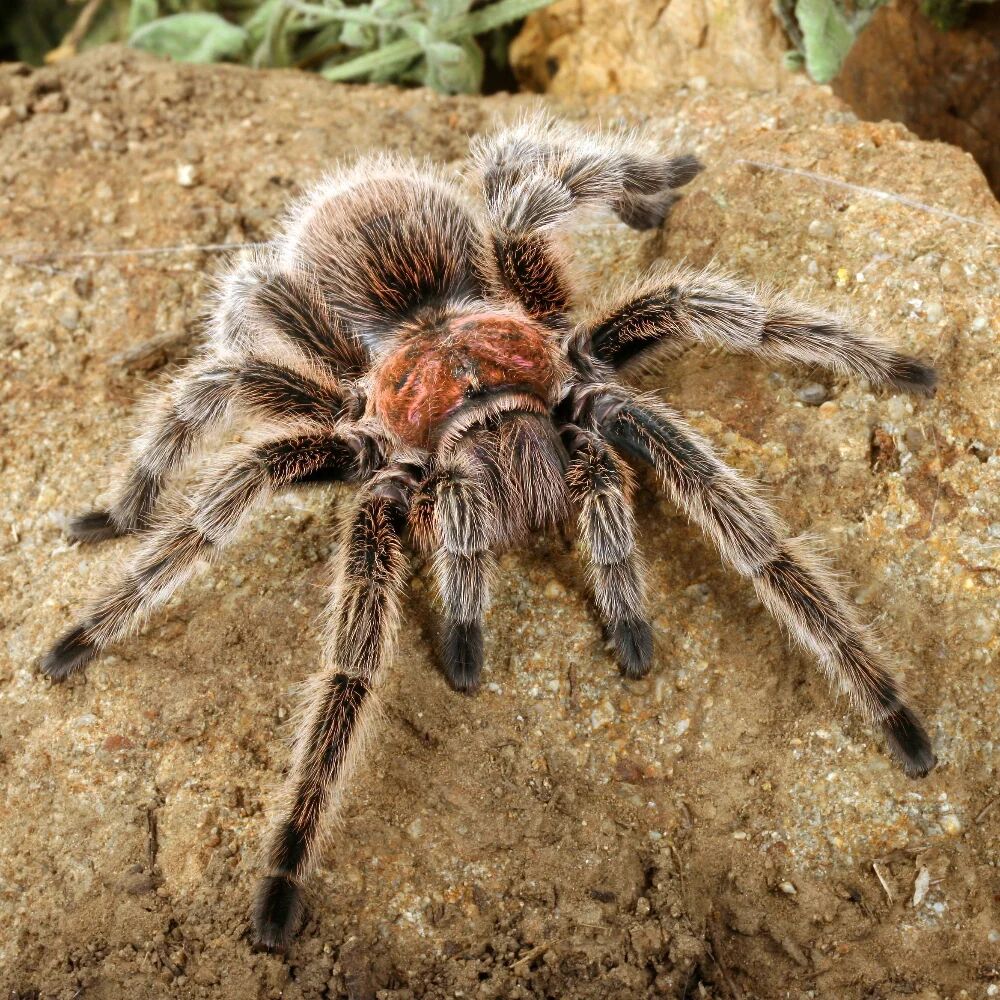
Chilean rose tarantulaGrammostola rosea / G. porteri
The Chilean rose (rose hair) tarantula comes from the dry scrubland of Chile, Bolivia and Argentina. It's slow-growing, generally calm and one of the longest-lived tarantulas in the hobby.
Enclosure
Adults need a horizontal enclosure about 3–5 times their legspan, with a secure lid. Keep the height low so a fall from the lid can't injure them.
Temperature
Room temperature in most UK homes works well: 20–23°C. If you need extra heat, use a thermostat-controlled heat mat on the side, never underneath.
Humidity & water
Keep the substrate mostly dry with moderate humidity. Always provide a shallow water dish, and occasionally dampen one corner.
Substrate & decor
Fill the enclosure about half to two-thirds with a soil-based substrate so they can dig, and add a hide such as a piece of cork bark.
Diet & feeding
Spiderlings: twice a week. Juveniles: every 7–10 days. Adults: every 2–3 weeks or as needed, based on the size of the abdomen.
Offer crickets, dubia roaches or locusts no bigger than the body, and remove anything uneaten within 24 hours.
Rose hairs are known for long fasts, sometimes months, especially before a moult. This is normal if the spider has water.
Moulting
Before a moult the spider stops eating and may lie on its back. Don't disturb it and remove any live food.
After a moult, wait about 5–10 days for adults before feeding, until the fangs are fully black and hard.
Handling
Rose hairs are usually calm but can be unpredictable. Handling isn't needed and a fall can kill them, so keep it low to the ground if at all.
They can flick urticating hairs that irritate skin and eyes. Wash your hands after maintenance.
Health watch
Dehydration (a shrivelled abdomen), falls, and problems during a moult. Leave moulting spiders alone.
Every animal is an individual. Use this sheet as a starting point, measure temperatures and UVB properly, and speak to an exotic vet about any health concerns.
Last updated October 2026. Care guidance is subject to change as husbandry research develops.